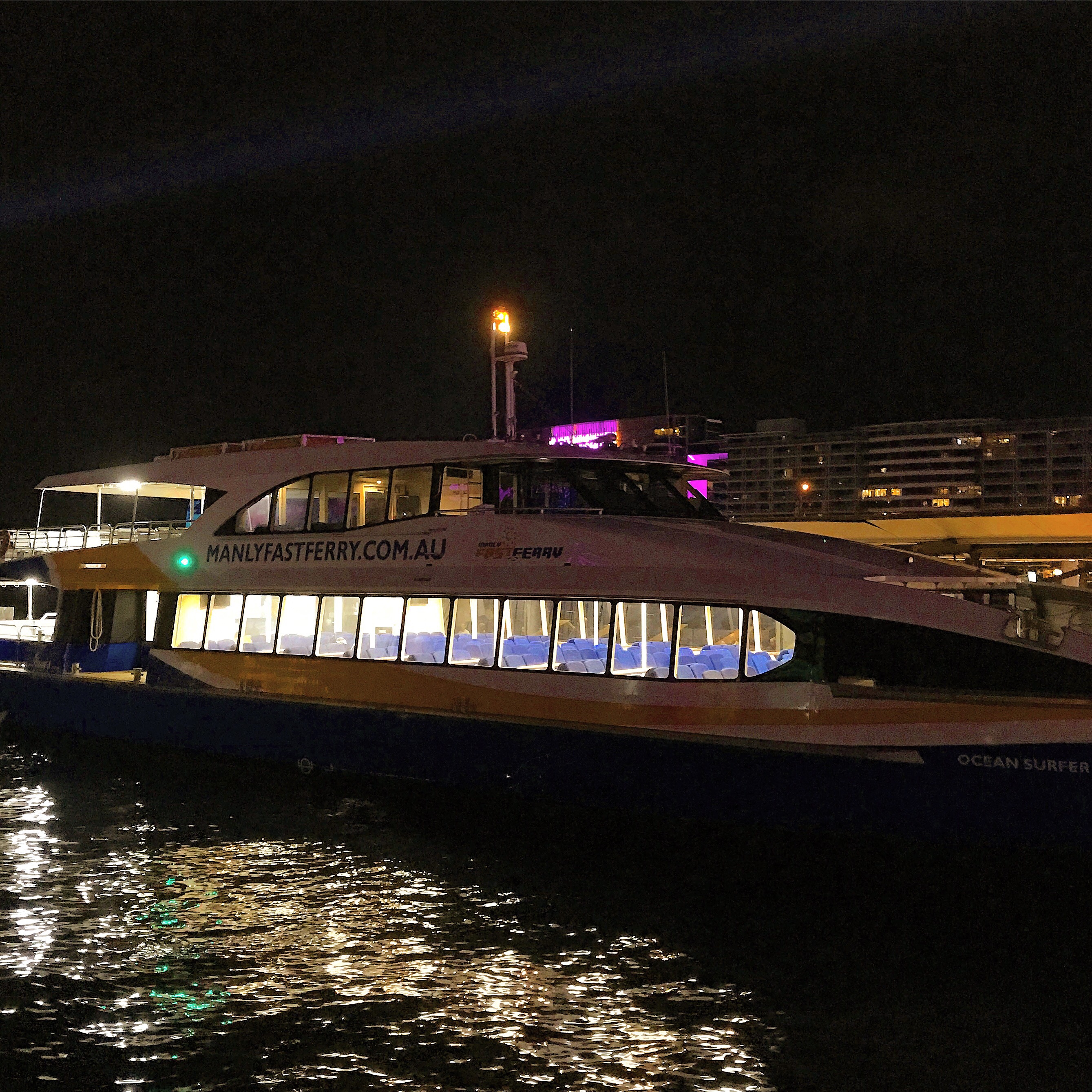
This week we are staring a series on the various Private operators that operate ferries in Sydney Harbour (Other than government owned, but privately run Harbour City Ferries). We are starting with Manly Fast Ferries.
Features of this line include
17 minute ferry trip from Manly to Circular Quay and Circular Quay to Manly
Hourly services between Manly & Circular Quay through the day, Monday to Friday.
Extra services operate on weekends and during summer months.
Services operate between Manly & Darling Harbour to Circular Quay, seven days per week
Bring your bicycle on board
Fully licenced with a bar onboard
Modern, clean & comfortable vessels with plenty of indoor & outdoor seating
Experienced & friendly staff with local sea knowledge
Discounted pricing for multi ticket purchase
Discounted ‘time of day’ pricing
Purchase tickets onboard or at our ticket booths located at Manly Wharf or at Circular Quay on the concourse close to Jetty 3
Hop on Hop off 24 hours passes are avalible to ride the service as many times as you like, this is particularly marketed at tourists with views of the Opera House, Harbour Bridge, Luna Park, Fort Denison, Walsh Bay and Sydney Heads billed as the highlights.
From Thursday 6 July, as part of a trial of contactless payments, people have beeN able to pay for their fare between Manly and Circular Quay on the F1 Manly Ferry service by tapping on using their Mastercard® card or mobile device linked to their Mastercard account. Contactless payments offer a convenient alternative to an Adult Opal single trip ticket without needing to buy a ticket from an Opal ticket machine.
How to use contactless
If your Mastercard card displays the contactless payment symbol or you have a mobile device linked to a Mastercard account, then you can use it to tap on the gates to pay for your fare. You can tap on at Opal card readers with a Mastercard credit card, debit card or enabled mobile device at the start of your trip.You will be charged the same as an Adult Opal single trip ticket.Opal benefits such as daily or weekly fare caps will not apply to contactless payments. You can only use your card or device to tap on for one fare per trip. You can reverse your tap on by tapping off again within 30 minutes of travel, just as you would with an Opal card. You will still be able to pay for your trip with an Opal card or Opal single trip tickets. If you are entitled to concession fares, you should travel with a Child/Youth, Concession or Gold Senior/Pensioner Opal card to avoid paying a higher fare. Make sure you separate your cards. If you tap your purse or wallet containing more than one contactless payment card (including an Opal card) on an Opal reader you could be affected by card clash. Please ensure the card or device used is separate from any other contactless-enabled card, including Opal cards. If an Opal card reader detects more than one card, it could take payment from a card you did not intend to pay with, or it may fail to register your card.
This week I’m actually skiing in Perisher! To celebrate, this week on Train Talk Tuesday, we will be looking at Perisher’s SkiTube!
SkiTube Alpine Railway is a standard gauge single track electric rack railway. It is located within the Kosciuszko National Park and has stations at Bullocks Flat, Perisher Valley and Blue Cow along its 8.5 kilometre length. It services the Perisher Ski Resort and only operates during ski season. It is 5.9 kilometres from Bullocks Flat to Perisher Valley, 2.6 kilometres above ground 3.3 kilometres underground on a 12.5% gradient. It is a futher 3.4 kilometres to Blue Cow. A passing loop is provided at the tunnel entry and at Perisher Valley Station.
The SkiTube was bulit during the large scale development of the Thredbo and Pershier Valleys for ski fields. Various options were explored for how to efficiently get guests up the mountain without roads. Other considered modes included a funicular railway and a gondola. It was decided at a rack railway was the best option, with a single track being comnsidered sufficent as Kosicuzizko Road is passable in Winter.
Construction commenced in October 1984, with tunnelling commencing in 1985. The line opened between Bullocks Flat and Perisher Valley on July 26 1987, with the line between Perisher Vallet and Blue Cow opened on March 31 1988.
The journey to Perisher Valley from Bullocks Flat takes about 11 minutes, and about 6 minutes from Blue Cow. Trains run between Bullocks Flat and Perisher Valley between 5am and 1am daily and between Perisher Valley and Blue Cow between 7am and 6pm. On Thursday through Saturday trans run all night. Services operate every 20 minutes between 7am-11am and 3pm-6pm, every 30 minutes between 6am-7am and 11am-3pm. An hourly service is provided on only request after 6pm. On Friday through Sunday, Luggage is prohibited on trains between 8am-10am and 3:30pm-5pm.
Services on the SkiTube are very popular, and passengers are advised to arrive well before the train departure time. Doors are closed to the Platforms at Bullocks Flat 1 minute before train departure. In some instances, passenger displacement has occured, particularly between Perisher Valley and Blue Cow on weekends and during school holidays and between Perisher Valley and Bullocks Flat on the last train before luggage is prohibited and the first train after the prohibition is lifted as well as on weekends when there is good snow.
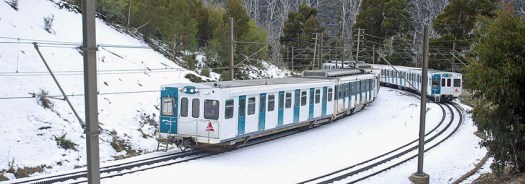
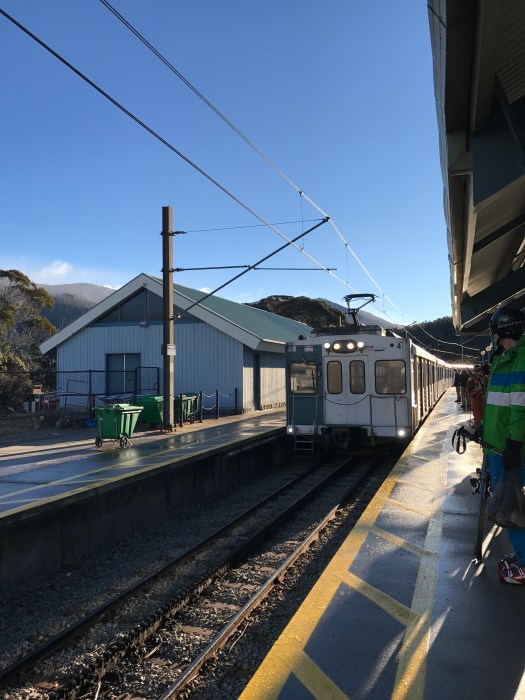
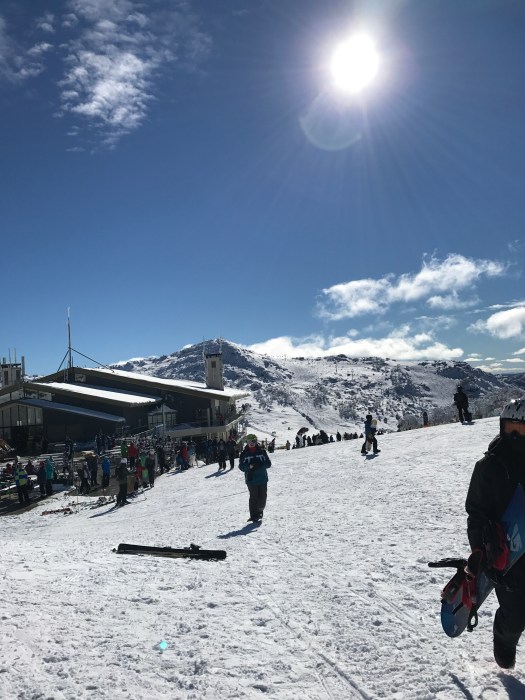
Two SkiTube trains at the passing loop in the snow (Photo: Perisher)A SkiTube train at Bullocks Flat StationView of Blue Cow SkiTube station, with Mt Blue Cow in the background
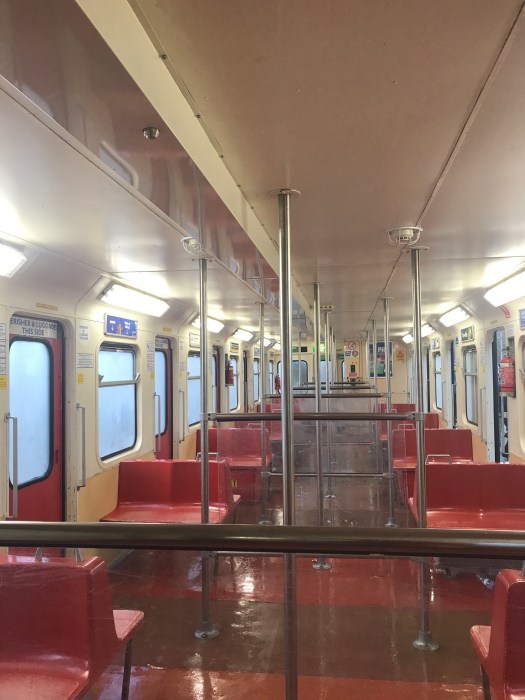
The interior of an empty SkiTube train
The interior of a SkiTube train suffering from Overcrowding (Hi Hugo!)
Today our request comes from Lachlan Culverhouse, it is of the L94
The L94 is limited stops variant of route 394. It runs between Circular Quay and La Perouse via Taylor Square, UNSW, Maroubra and Little Bay. It stops at limited stops from Circular Quay to Maroubra Junction then all stops to La Perouse. The stopping pattern is as follows;
Circular Quay
Martin Place
St James
Museum
Taylor Square
Abbotsford Street
Todman Avenue
UNSW
Nine Ways
Avoca Street
Maroubra Junction
All Stops to La Perouse
It operates daily between 6am and 6pm inbound, 8am and 7pm outbound. Buses run every on a 15 minute frequency Monday through Saturday, with a half hourly frequency on Sunday. It takes between 45 and 55 minutes to operate the series end to end.
The route is operated by Port Botany depot using 12m buses with Mercedes Benz or Scania Chassis with Custom Coaches or Bustech bodywork respectively. In addition, a large number if services is operated by 14.5 m high floor buses with Scania Chassis and Ansair bodywork. A limited number of peak hour services are operated by Randwick Depot using buses with Volvo chassis and Custom Coaches bodywork
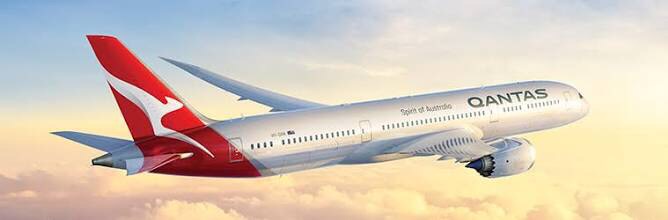
Today we are looking at the Qantas 787 and where it will be flying.
There are two routes that have been confirmed for the Qantas Boeing 787
QF9/10 Melbourne-Perth-London
QF93/94/95/96 Melbourne-Los Angeles
When the 787 first arrives in October 2017, it will likely fly various proving routes on domestic flights, thses are likely to be on the following routes
Sydney-Melbourne
Sydney-Perth
Melbourne-Perth
After these flights, once the second 787 in December 2017 arrives, they will take over QF96/96 on a daily basis from the 747s that currently operate the service which will be retired. When the third 787 arrives in Feburary 2018, it will be rostered onto QF93/94 three days a week, with the A380 currently used on the service put on QF127/128 Sydney-Hong Kong three days a week.
Once the fourth 787 arrives in March, all four 787s will be rostered onto the following pattern; Melbourne-Perth-London-Perth-Melbourne-Los Angeles-Melbourne. These flights will have the following flight numbers; QF9-QF9-QF10-QF10-QF95-QF96
The other four 787s are expected to arrive in the second half of 2017. Whilst it hasn’t yet been reported what routes these aircraft will fly, there is wide spectulation on what routes that they will fly. The most popular theory is that they fly a similar pattern to the first four, but using Brisbane as the east coast node instead of Melbourne. This would mean that QF15/16 Brisbane-Los Angeles will be operated by the 787 as well as a Brisbane-Perth-Europe route. The European port is likely to be one of four options based on comments made by Qantas executive and passenger demand.
Paris
Frankfurt
Berlin
Rome
Beyond this it is likely that Qantas will order more 787s that will replace the 747s that Qantas currently operates. This could lead to the following flights becoming partially or fully operated by 787s. This is dependent on how many 787s Qantas orders with 7 more at the very least being likely and regulatory restrictions on two engine aircraft (ETOPS) are lifted or modified.
QF25/26 Sydney-Tokyo
QF27/28 Sydney-Santiago (ETOPS dependent)
QF63/64 Sydney-Johannesburg (ETOPS dependent)
QF73/74 Sydney-San Francisco
QF74/75 Sydney-Vancouver (Move from seasonal to year round rumoured)
QF127/128 Sydney-Hong Kong (Qantas plans to operate A380s 3-4x per week)
Other new routes that have been suggested could operate with these aircraft in the future include.
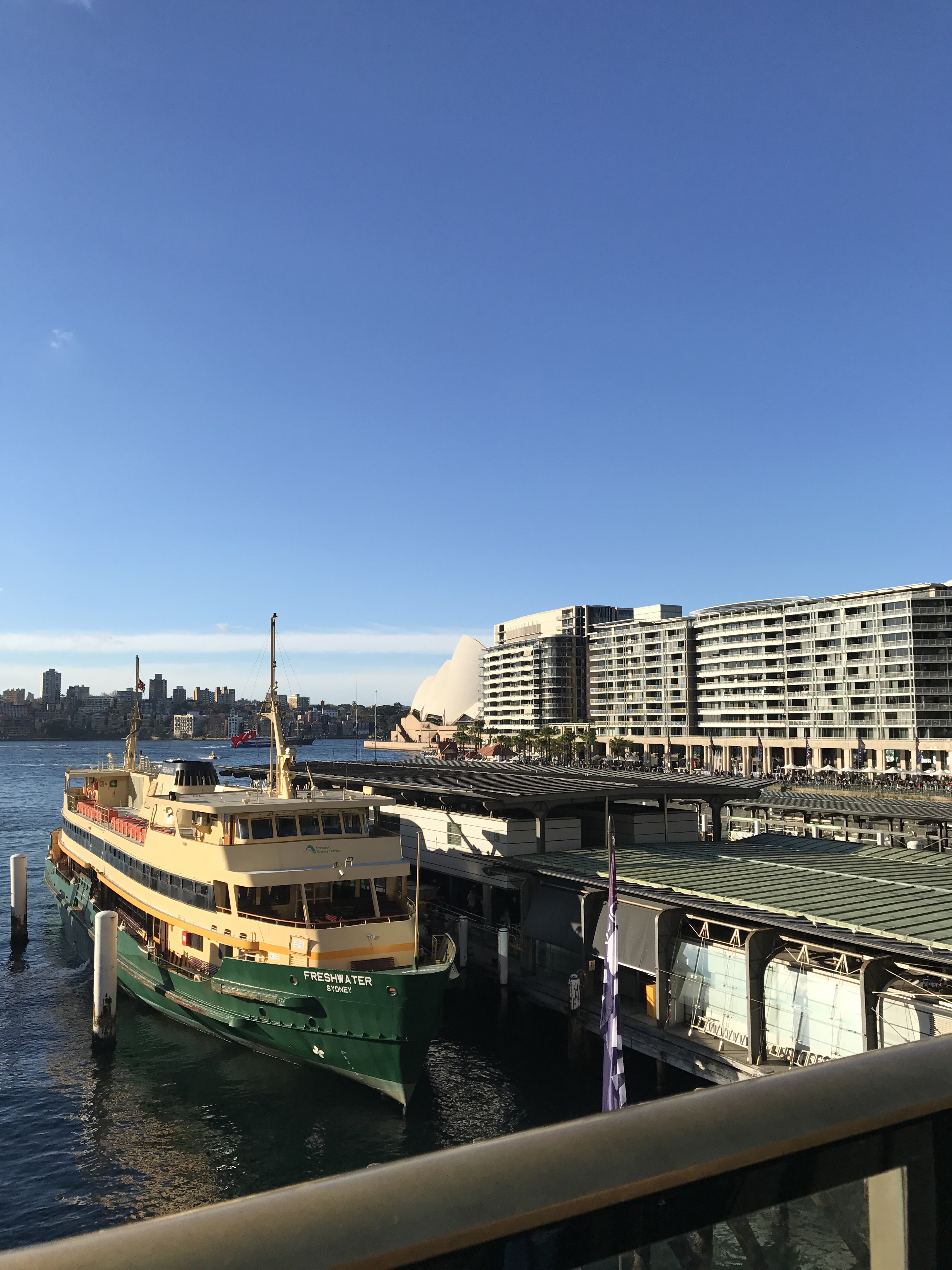
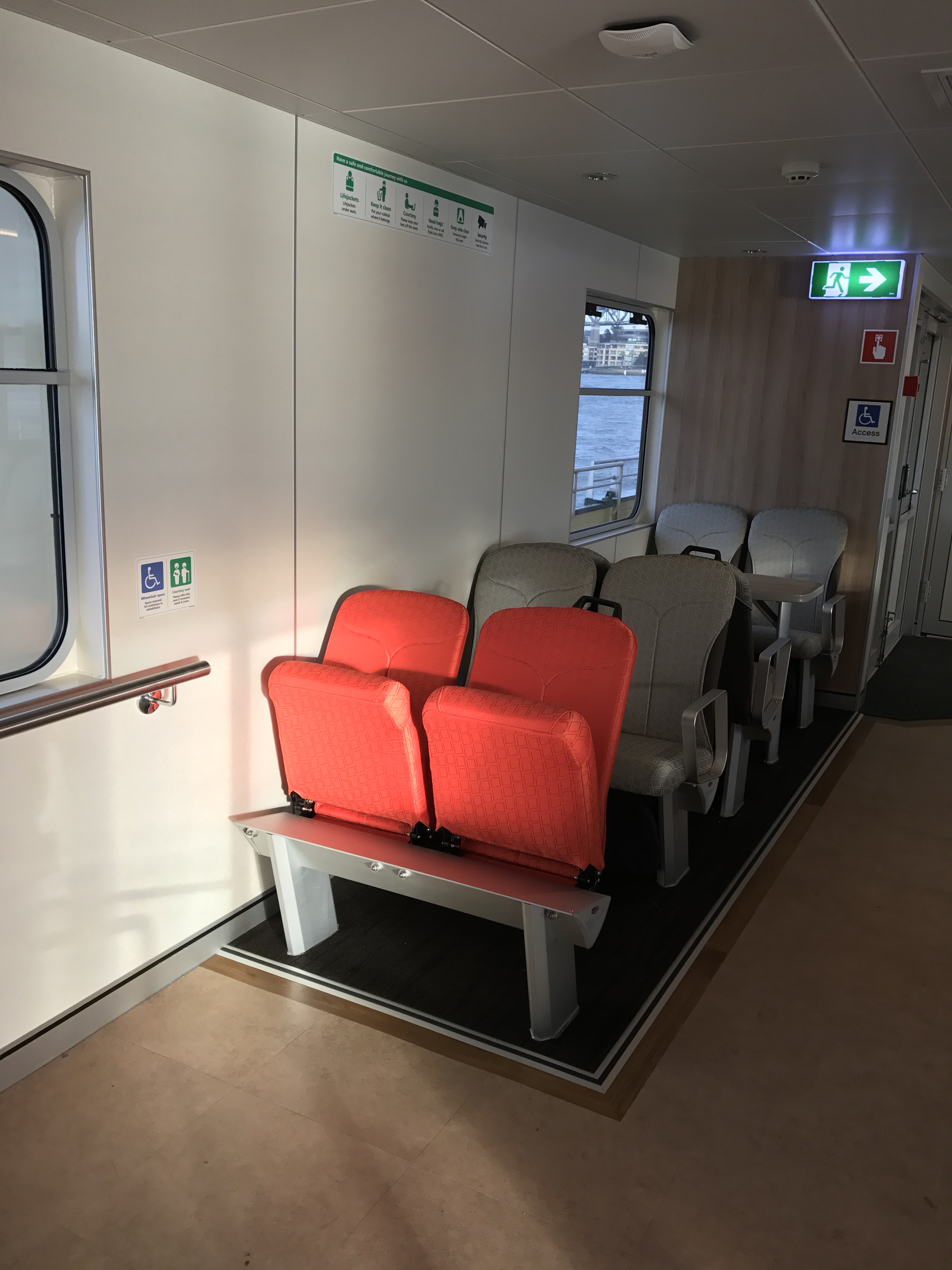
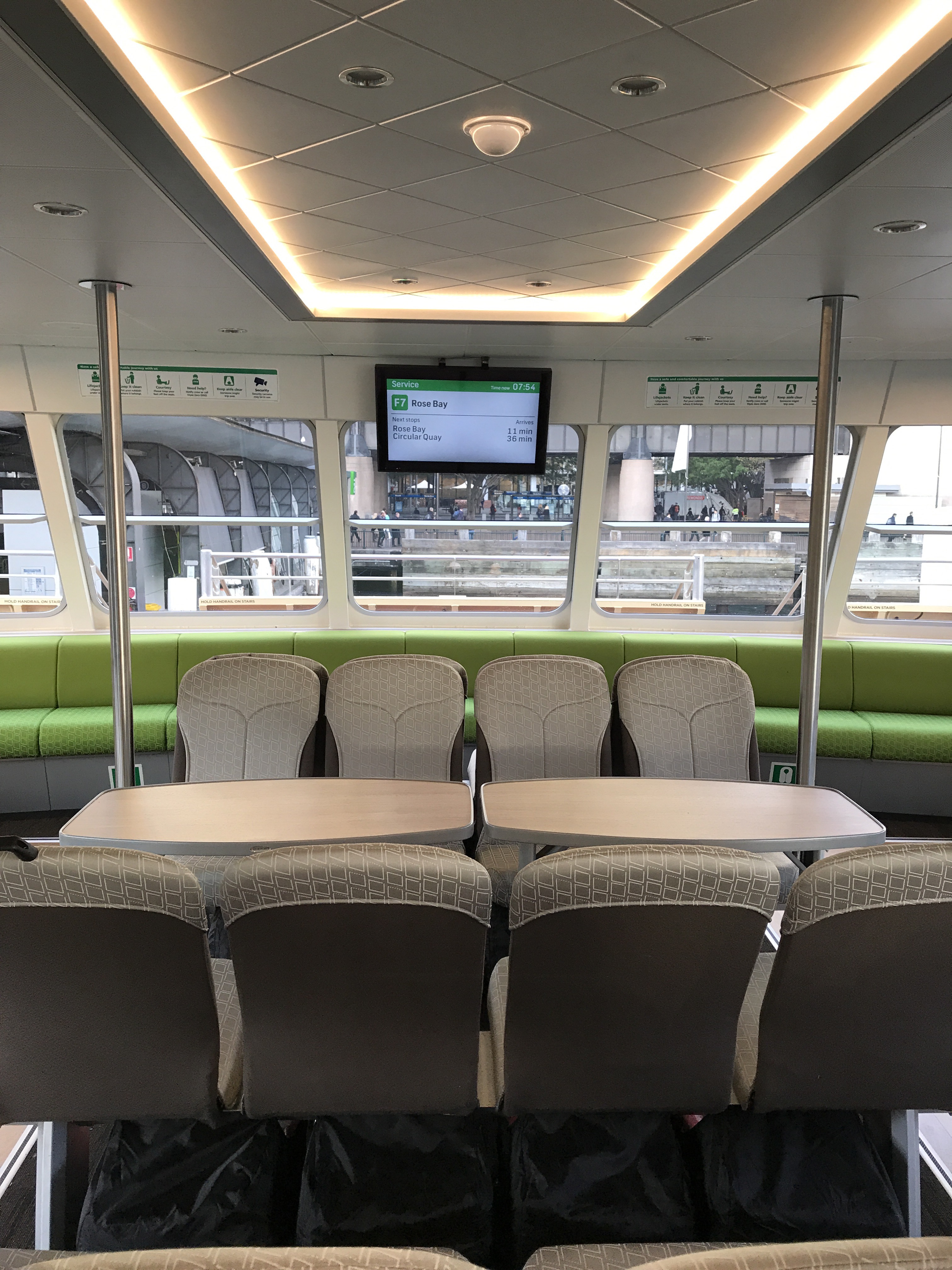
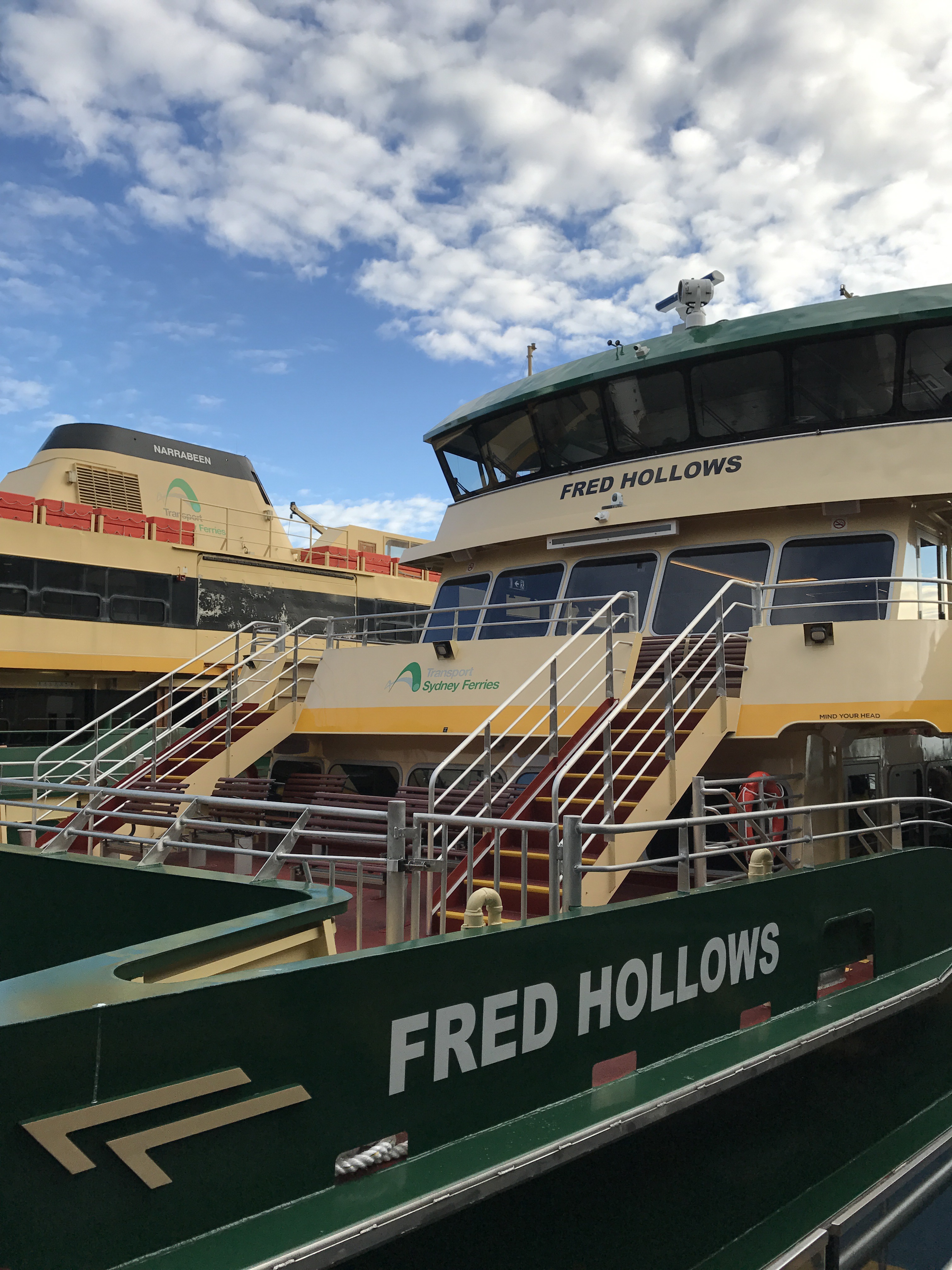
Today we are looking at the final ferry type in the Sydney Ferries fleet. The new Inner Harbour ferries, they have been coquially called the Hertiage or Emerald class but no offfical name has been given.
This class of ferry is being built by Incat in Tasmania. The first ferry “Catherine Hamlin” was delivered in December 2016, however due to manufacture faults is yet to enter service. The second ferry delivered and first to enter service was “Fred Hollows”, it was delivered in March 2017 and entered service in June 2017. The third ferry “Victor Chang” was delivered in June 2017 but is yet to enter service.
The new ferries are expected to operate on the F4 Darling Harbour, F5 Mosman Bay, F6 Neutral Bay and F7 Rose Bay services.
Features of the new ferries include;
Capacity for up to 400 passengers
Two wide walk-around decks
Accessibility for the less mobile and young families
Bicycle and luggage storage
Wi-fi access
Real time journey information
12 wheelchair spaces
Rapid and safe boarding
Reduced travel times
On a more technical aspect the ferries travel at 26 knots and are 36.38 metres long. They have a displacement of approximately 50 tons depending on passenger numbers.
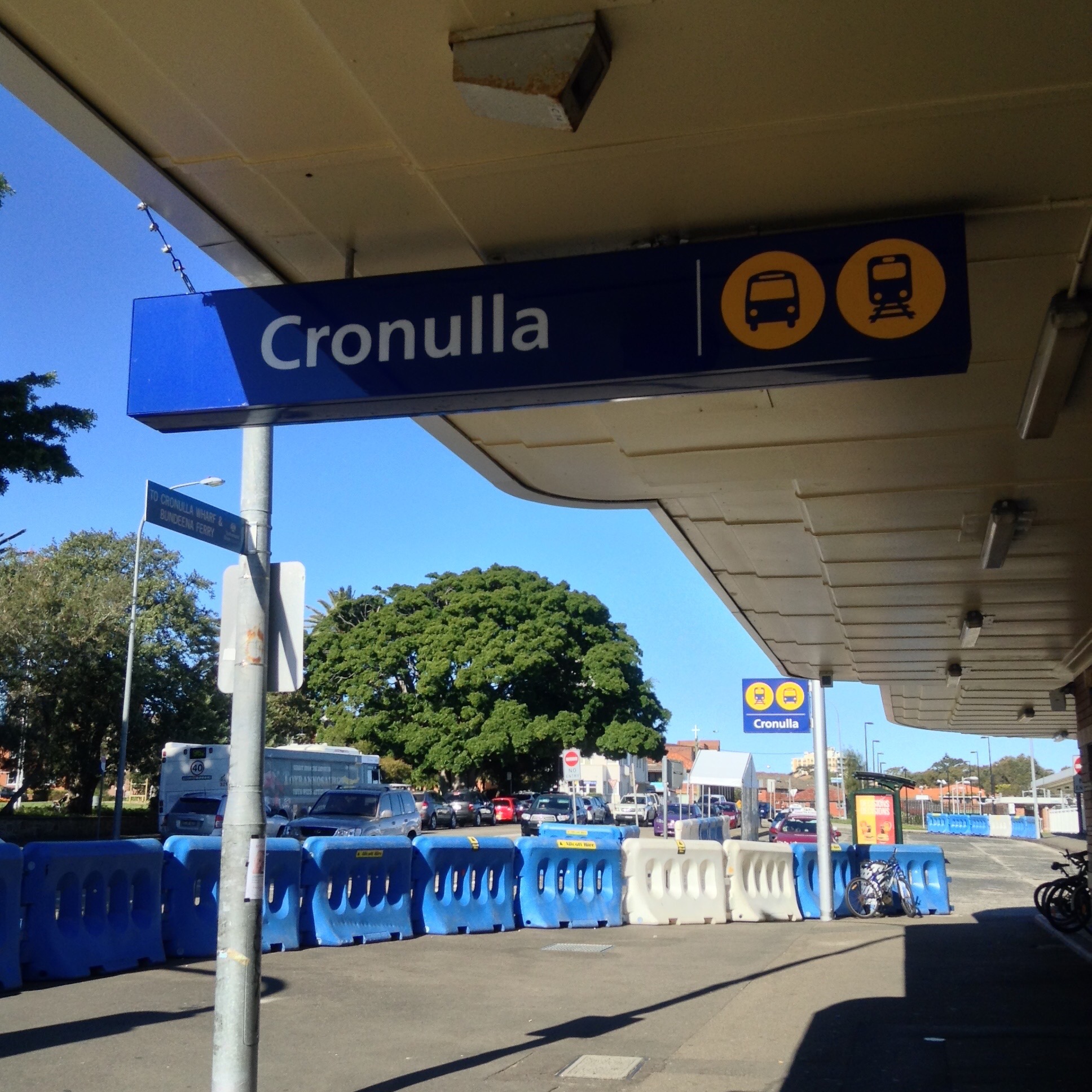
This week we will be looking at the Cronulla Branchline.
It is 10km long and runs between Sutherland and Cronulla with 6 stations on the line. The stations are located at Kirrawee, Gymea, Miranda, Garingbah, Wooloware and Cronulla.
The Cronulla Railway line oriinated as a tram line between Sutherland and Cronulla along the Kingsway. It was very congest and only single track and by the 1930s had outgrown its use. After its closure in 1932, planning for a rail line began. Various delays ensued but it finally opened on 16 December 1939. It was initally a single track with passing loops, and was depicted between Gymea and Caringbah in the 1980s. The rest of then line was duplicated in the early 2000s as part of the Clearways program.
Today trains run on the line as part of Sydney Trains T4 Eastern Suburbs and Illawarra Line using T-Sets based at Mortdale depot.
Today our request comes from Jamie C and Margot C. It is for Route 377 which runs between Maroubra Beach and City Circular Quay via South Coogee, Randwick, Moore Park and Taylor Square. A small number of saturday morning trips begin at Randwick Depot instead of dead running to Maroubra Beach.
It operates between 5am and 1am daily. It has a frequency of 10-15 minutes in Peak hour, 30 minutes off peak and on weekends. It takes between 35 and 55 minutes to run from end to end depending in time of day and traffic conditions.
It is usually operated by Randwick Depot using buses with Volvo and Scania chassis and Custom Coaches bodywork. During peak hour this is supplemented by Port Botany depot.
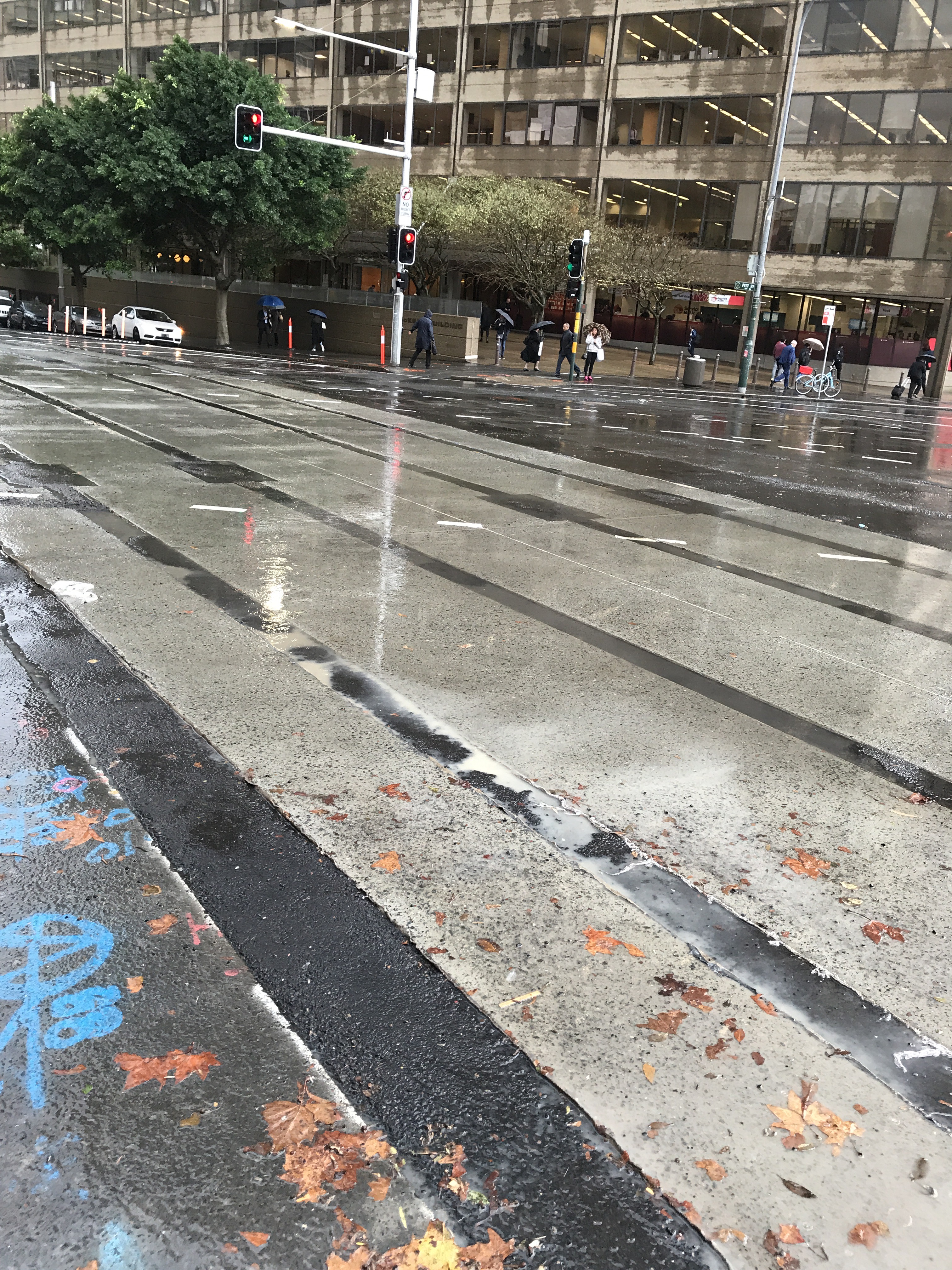
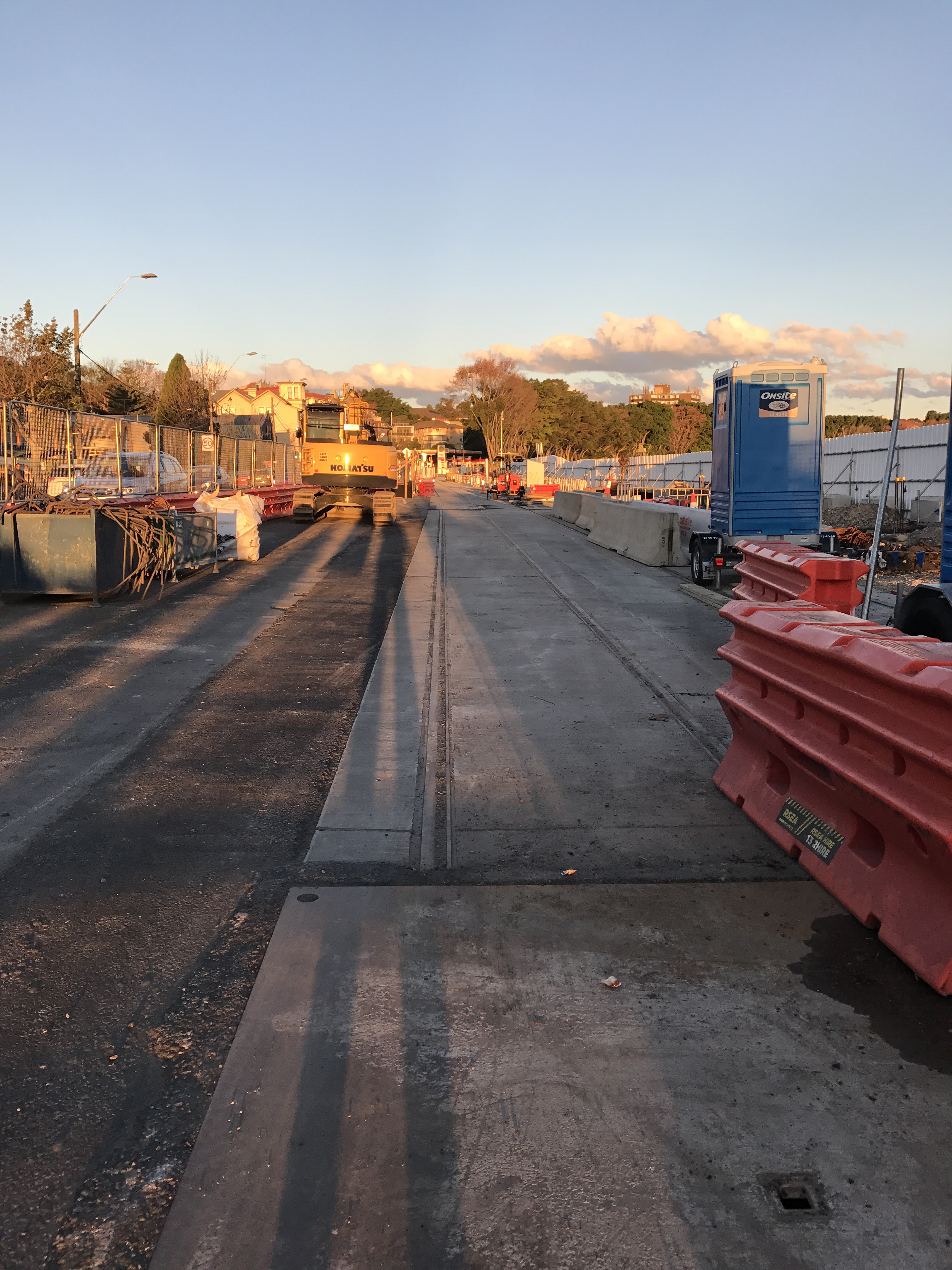
Welcome to July and another instalment of Tram Tracks. Light Rail construction is well underway throughout the entirety of the Sydney CBD and South East with work underway in most construction zones with the expecting of Chambers Street at Central Station.
Over 10 kilometres of track has now been laid including along Alison Road in Randwick, ANZAC Parade through Kensingtonand on George Street in the Northern CBD. This includes the pavers and third track through the CBD. Tracklaying works remain ongoing and are now being completed daily. It is understood that a majority of utilities works are now complete wth some minor work in zones that are yet to commence construction still to go.
In addition, traffic changes are continuing throughout the city. George Street is now permentkly closed between Bathurst Street and Hunter Street and Rawson Place is also permently closed. The Nine Ways Roundabout in Kingsford has now been removed and replaced with traffic lights for light rail.
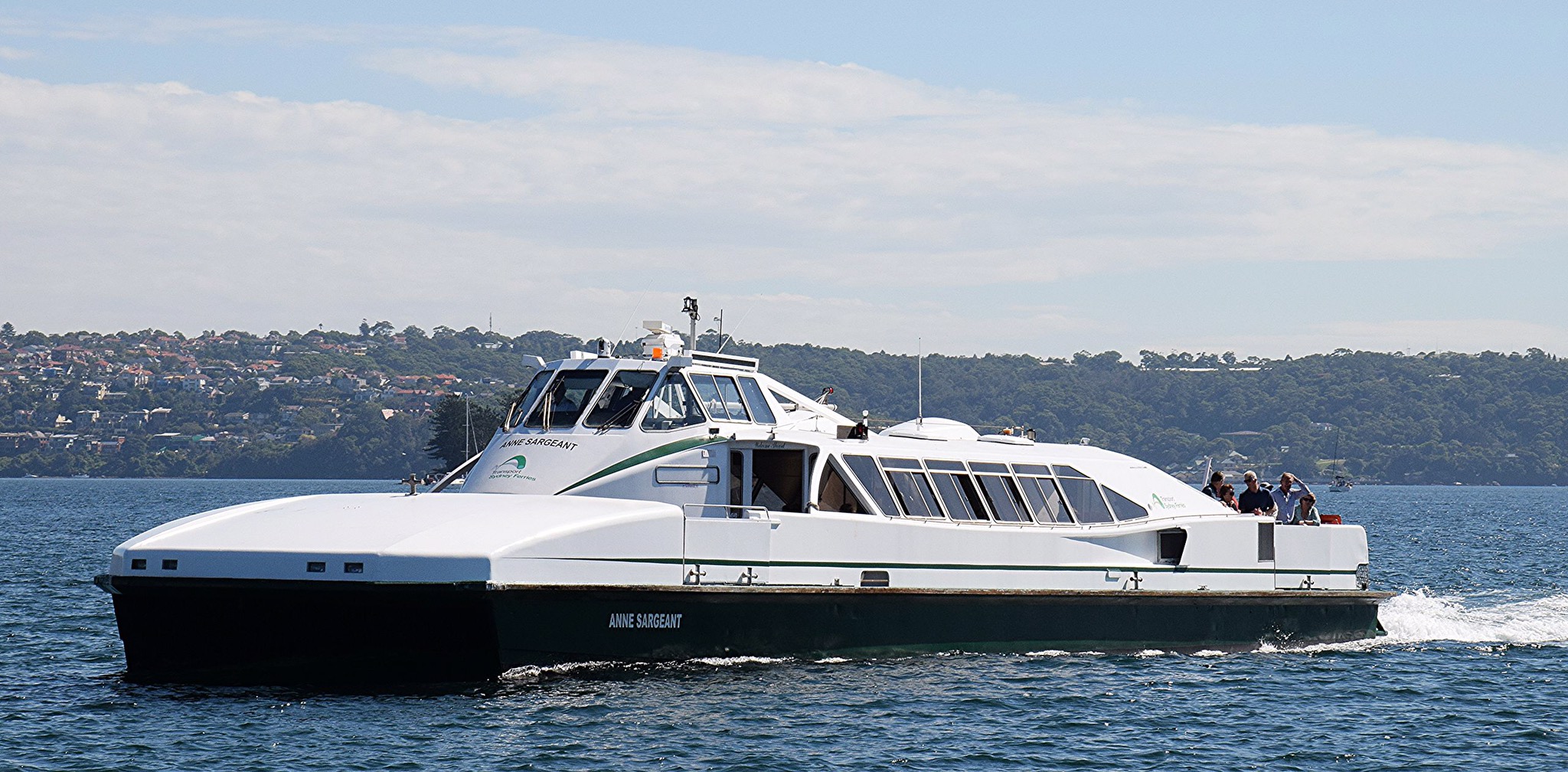
Today we will be looking at the HarbourCat ferries. They were the first of two classes of ferries delivered under the Carr state government with Carl Scully as Transport Minister.
The ferries operate on the F3 Parramatta River and F4 Darling Harbour lines.
They were based on the design of the RiverCats however are slightly shorter with a lower capacity and less displacement. These modifications allow the ferries to travel futher up Parramatta River at lower tides than the RiverCats. This led to a reduction in cancellations of ferry services to Parramatta at low tide from 1 in every 2.5 days to one in every 25 on average.
There are 2 HarbourCat ferries that were both delivered in 1998 and carried on the tradition of being named after Aussie sports stars from the RiverCats. They were named Anne Sargeant and Pam Burridge.
They have a passenger capacity of 150 passengers, a top speed of 22 knots, a length of 29.6 metres and a displacement of 35 tones.













 Transport NSW Blog