Sydney Bus Regions to be Put Out to Contract

The State Government has announced that 13 of the 14 bus contract regions will be put out to tender next year for a takeover date of 1 July 2021. All regions except for Region 6, which is the Inner West region privatised last year, will be out out to a competitive tender.

Controversially, this will include the three State Transit operated regions. The privatisation of these regions will mean an end to government operated bus services in Sydney after nearly 89 years.

fullsizeoutput_ef7.jpeg
State Transit services across the Eastern Suburbs, Northern Beaches, North Shore and North West are being privatised – Transport NSW Blog Collection

Continue reading “Sydney Bus Regions to be Put Out to Contract”

Sydney Metro West Station Locations

The exact station locations for Sydney Metro West have been revealed by the State Government. The locations of seven proposed Metro stations have been confirmed at Westmead, Parramatta, Sydney Olympic Park, North Strathfield, Burwood North, Five Dock and the Bays Precinct.

Further, the feasibility of building a Metro station in Pyrmont its being investigated, while also assessing a potential station at Rydalmere. Further work is also underway to determine the location of the new Metro station in the Sydney CBD.
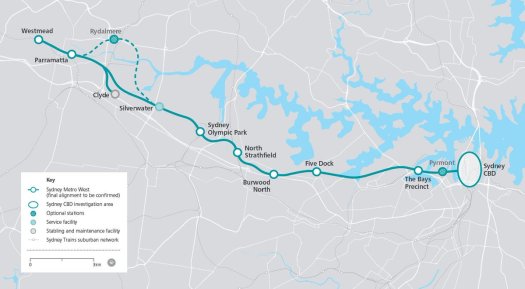
EHXNoWBU0AAnEdz.jpeg

Westmead: The eastern side of Hawkesbury Road, south of the existing Westmead station. The new station will have one entrance on Hawkesbury Road.

Parramatta: On the block bound by George, Macquarie, Church and Smith streets with an entrance on Horwood Place.

Sydney Olympic Park: To the south of the existing train station. It will sit to the east of Olympic Boulevard with the main station entrances between Herb Elliot Avenue and Figtree Drive, and off Dawn Fraser Avenue.

North Strathfield: Adjacent to the existing train station. New metro platforms will sit alongside the existing station and entry to the station would be from a new entrance on Queen Street.

Burwood North: At the corner of Burwood and Parramatta roads, with entrances on both the north and south sides of Parramatta Road.

Five Dock: Located off Great North Road, between East Street and then at the corner of Second Avenue and Waterview Street. The station entrance will be at Fred Kelly Place off Great North Road.

Bays Precinct: Located between Glebe Island and White Bay Power Station with an entrance to the south of White Bay.

These stations are typically well located, however there could be better connectivity at Parramatta and Westmead. The areas surrounding Burwood North and Bays Precinct are rip for redevelopment and gentrification allowing for the metro line to kick start these areas. Five Dock and North Strathfield will both allow for connections into the existing transport network.

With the announcements of the new station locations, there has been some controversy. Around 120 properties will need to be acquired to build the new line, including the Sydney Speedway in Granville. There has already been protests surrounding some of these acquisitions. The line has been further delayed to a 2030 completion and is already looking to break its $20 billion budget. Further, their is criticism of the fact that the line has so few stations, with large 13km and 7km gaps between some stations. It has been suggested by the media and transport analysts that there should be more stations along the line.

Here at Transport NSW Blog, we tend to agree with the criticism that there aren’t enough stations along the line. Metro lines should theoretically have close station spacing and even if station spacing is further apart than a traditional metro, the 13km gap between Parramatta and Olympic Park or the 7km gap between Five Dock and Bays Precinct. Stations at Camellia, Leichhardt North and Pyrmont should be built in order to provide full connectivity and the best outcome for all commuters. This would inevitably lead to a small increase in travel times, but with high service frequencies this would be inconsequential.

It is also concerning that only one CBD station is currently proposed. To get the best possible outcome, there really needs to be more than one CBD station. It is the opinion of Transport NSW Blog that a station under Hunter Street (named and connected to Martin Place), as well as a station under College Street at Hyde Park South, with an entrance at the corner of College, Liverpool and Oxford (named Memorial, after the Hyde Park War Memorial) would be the best outcome. The line should then follow the ridgeline southeast.

Cumberland Line sees extra service from 6 January 2020

From Monday January 6 2020, there will be an extra northbound service on the T5 Cumberland line each weekday during the morning peak.

IMG_8076

The new direct all-stops morning peak service departs Leppington at 7.07am, arriving at key stations such as Parramatta at 7.49am, Blacktown at 8.07am and Schofields at 8.17am.

The existing 7.21am all stops Leppington to Schofields service will instead depart at 7.37am, arriving at key stations such as Parramatta at 8.19am, Blacktown at 8.37am and Schofields at 8.47am.

These changes will create a consistent half hourly frequency throughout the morning peak, reducing the wait time between services by up to 16 minutes.

Over the past year, patronage on the T5 Cumberland line has surged, creating over crowding, particularly on the highly popular 7:21am service. 30 per cent more passengers arrived at Parramatta on T5 trains this year compared to last. 

Transport Minister Andrew Constance noted “By boosting capacity on an increasingly busy part of the network, customers across the south-west region including Glenfield, Liverpool and Cabramatta will enjoy a more comfortable and convenient morning commute. Customers from the T8 South Line between Macarthur and Macquarie Fields will also benefit from the new service as it provides an extra connection at Glenfield to T5 services headed towards Parramatta and further west.”


Carlingford Line to Close 5 January 2020

The T6 Carlingford Line between Clyde and Carlingford is being permanently closed from 5 January 2020. This closure is to allow for the construction of Parramatta light rail between Carlingford and Westmead, which will partially use the corridor.

IMG_3187
The Parramatta Light Rail will partially use the old Carlingford rail corridor – Transport for NSW

A new bus route will service the corridor between Carlingford and Parramatta during light rail construction. Route 535 will operate from January 5, 2020 with stops at Carlingford, Telopea, Dundas, Rydalmere, Camellia/Rosehill and Parramatta CBD.

Trams are due to start running along the first part of the route in 2023. When the light rail opens it will provide the same area with a service every seven and a half minutes between 7am and 7pm on weekdays.


Featured Bus Route – October 2019

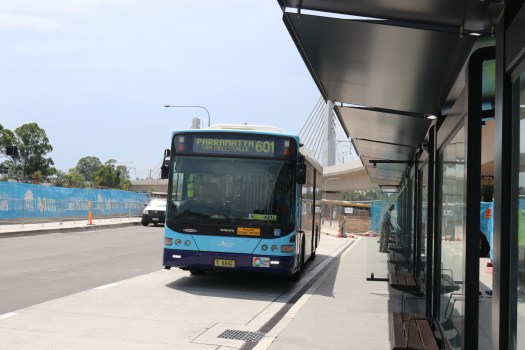
The featured bus route for October 2019 is Route 601. It runs between Parramatta and Rouse Hill via Northmead, Baulkham Hills, Hills Showground and North Kellyville and is operated by CDC Hillsbus.

10783440208_IMG_8828.JPG

Route 601 came into existence on 30 May 1983, when there was a reorganisation and renumbering of Route 200 and its various branches. At this time it was operated by Parramatta Bus Co. (Bosnjak family). Parramatta Bus Co. rebranded as Westbus from 1984. On 3 February 1988 the route was extended to Windsor Shops and later on 11 November 1988 the terminus in Windsor was moved from the shops to the station.

From 20 March 2000, route 601 was truncated to run Parramatta – Rouse Hill (Mile End Rd). Rouse Hill (Mile End Rd) – Windsor station replaced by the new route 608. In December of 2004, Westbus was rebranded Hillsbus. From 11 March 2007, route 601 was truncated to operate Parramatta – Kellyville (loop via Acres Rd to Glenrowan Av) in connection with opening of the North West T-way. Service between Parramatta & Rouse Hill replaced by T64 & T65. From 11 May 2009, route 601 was re-extended from Kellyville (Acres Rd) to Rouse Hill Town Centre, as a result of Ministry of Transport review of Region 4.

Today CDC Hillsbus operates Route 601 out of its depots in Northmead and Seven Hills. it operates every 15 minutes all day on weekdays from 5am to midnight and every 30 minutes on weekends between 7am and 11pm. 

Opal network now Contactless

From Monday 23 September 2019, the entire Opal network now accepts contactless payments. This means that you can pay on all buses, ferries, trams and trains using your American Express, MasterCard and Visa contactless cards in addition to your Opal card.

Screen Shot 2018-11-26 at 2.47.13 pm

You will pay an Adult fare and, if you use the same credit card, debit card or linked device each time you travel, you will receive the same travel benefits of an Adult Opal card. Benefits include:

  • $2 discount for every transfer between modes (train, ferry, bus or light rail) as part of one journey.
  • The Opal Transfer Discount does not apply when transferring between light rail and Sydney Ferries.
  • Half price travel after eight paid journeys in a week.
  • Fares capped daily, weekly and on Sundays.
  • 30% discount on train fares outside peak times.

Featured Bus Route – September 2019

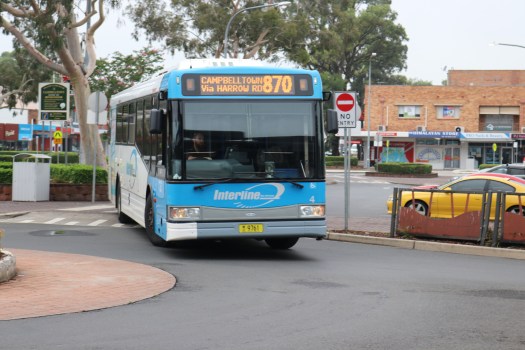
The featured Bus Route for September 2019 is Route 870. Route 870 runs between Liverpool and Campbelltown via Glenfield and Ingleburn, and is operated by Interline.

10801184464_IMG_8213

The current Route 870 has its history in a variety of different services that have been modified and amalgamated over the years. The earliest known predecessor dates back to an unknown date early in World War Two, when Route 94 began between Liverpool and Ingleburn. By 1952 Route 92 began servicing the corridor between Campbelltown and Ingleburn, with that service later renumbered and extended to Macquarie Fields as Route 102 in 1953.

After operating a variety of different exact routings under their 1925 system Route numbers (exact details are hard to determine), the routes were eventually renumbered into the Sydney Route Numbering System. Route 102 was spilt into a variety of different services, amongst them Route 870 between Macquarie Fields and Macurthur from 4 December 1983. Route 94 became Route 864 from Liverpool to Glenquarie and Route 866 from Liverpool to Ingleburn on 24 July 1995.

By 1995, Route 870 was being operated between Glenfield and Campbelltown by Interline. Route 864 and 866 were being operated by Busabout. From November 1998, Route 864 was extended to operate from Liverpool to Ingleburn, whilst Route 866 was extended to serve Denham Court.

As part of the Ministry of Transport review of Liverpool and Campbelltown area routes, the decision was made to amalgamate routes 864, 866 and 870 into one new single Route 870 from 18 August 2008. This new Route 870 was joined operated by Busabout and Interline and operated along the current route between Liverpool and Campbelltown via Glenfield and Ingleburn. As part of the competitive tendering of Region 2, Interline became the sole operator of Route 870 from 1 July 2014.

Today Route 870 operates hourly between 6am and 9pm Monday to Saturday. It operates every 30 minutes during weekday peaks and every two hours on a Sunday.

400 Dethroned, Sydney’s New Busiest Bus Route Revealed

Sydney has a new busiest bus route after the previous holder of the title, Route 400 between Bondi Junction and Burwood via Sydney Airport was truncated to operate solely between Bondi Junction and Sydney Airport last September.

IMG_3088.JPG
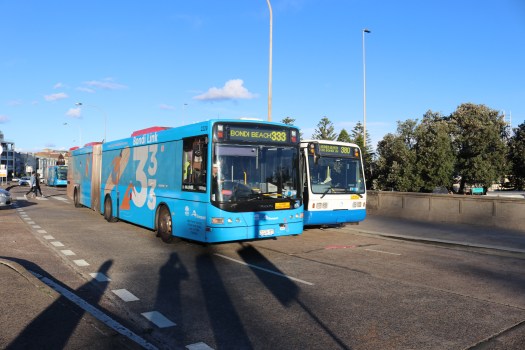
Route 333 is Sydney’s Busiest Bus Route – Transport for NSW Blog collection

Route 333 between North Bondi and Circular Quay via Bondi Beach, Bondi Junction and Oxford Street is Sydney’s new busiest bus route. This comes after the service was rebranded Bondi Link and had a major frequency increase to coincide with the introduction of a dedicated bendy bus fleet last year. This route is popular with tourists travelling to Bondi Beach and commuters along the densely populated Oxford Street and Bondi Road corridors.

The ability of the 333 to leapfrog up the list form 7th to 1st in just a year is largely attributed to a large frequency increase and the truncation of duplicating bus services such as the 380, which was truncated to operate between Watsons Bay and Bondi Junction rather than all the way to Circular Quay.

B-Line route B1 between Mona Vale and Wynyard has also proved to be highly popular, now the second busiest route in the Sydney bus network after launching just under 2 years ago.

Rounding out the top 5 busiest routes, in third place was Route 343 between Kingsford and Chatswood, in fourth place was Route 400 between Bondi Junction and Sydney Airport and in fifth place was Route M52 between Parramatta and Circular Quay.

916B50A7-2A43-4636-A81E-2A0E14FC38F1
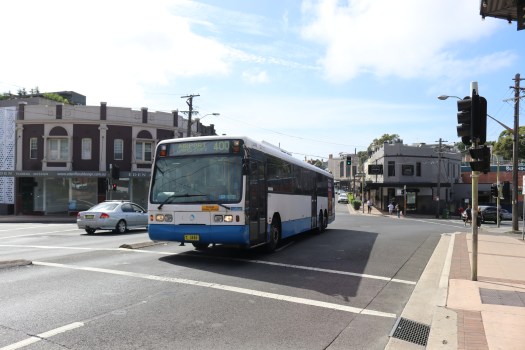
Route 400 is still the 4th busiest bus route this year after falling from 1st place due to its truncation – Transport for NSW Blog Collection

These new standings come from Opal data available through Open Data NSW. This data shows the struggle to attract patronage to Nightride services and services in Western Sydney, with the bottom ten services in terms of patronage all coming from those categories. It also reveals the large increase of patronage to routes in the Eastern Suburbs and Northern Beaches.

Bathurst Bullet 2.0 Starts September

A second daily Bathurst Bullet service will begin from September 16 2019, doubling the number of train services between Sydney and Bathurst.

bathurst-station-compressor.jpg
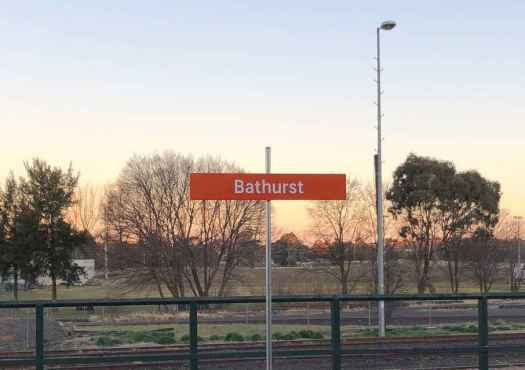
Bathurst Station will see an additional daily Bathurst Bullet form September 16 – Transport for NSW

The new service departs Bathurst Station later in the morning at 7.35am and then returns earlier in the afternoon, departing Sydney at 3.05pm and arriving in Bathurst at 6.47pm. There will be variations to this schedule on Wednesdays, Saturdays and Sundays to allow for existing Indian Pacific and Intercity services. The existing Bathurst Bullet service leaves Bathurst Station at 5.46am and then departs from Central Station in the evening at 5.47pm, arriving in Bathurst at 9.33pm.

The new service will stop at both Tarana and Rydal stations, allowing for better connections to Oberon and surrounding communities. This is considered a big win for these communities which have been fighting for these services since 2012, when the first Bathurst Bullet was introduced. These stops will also be added to the current service.


Featured Bus Route – August 2019

This month our featured bus route is Route 458, which runs between Burwood and Ryde via Strathfield, Concord Hospital and Rhodes. It is operated by State Transit.

-8330070128445559102_IMG_0157.JPG
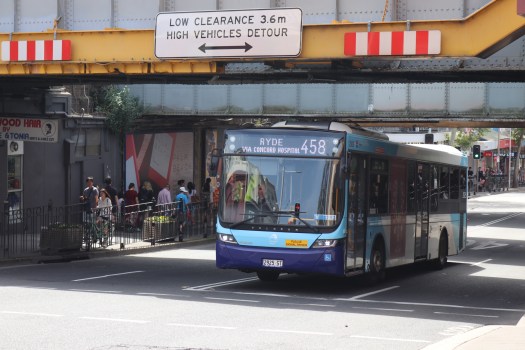
A Route 458 service passes Burwood Station – Transport NSW Blog Collection

The corridor between Burwood and Ryde has been serviced by many bus routes throughout history. The earliest know predecessor to route 458 was route 59. Commencing service between City York Street and Concord on 27 January 1933, Route 59 was one of the original DGT bus services. Upon the opening of the Ryde Bridge on 8 December 1935, the service was extended to Ryde. It was renumbered into the Sydney three digit numbering system as Route 959 on 3 November 1940.

From 1 September 1941, Route 959 trips that diverted via Concord Hospital were renumbered 958. On 21 September 1941, Route 958 became its own distinct route, operating between Burwood and Concord Hospital. On 29 August 1943, Route 958 was renumbered Route 458. Route 458 retained a similar route and timetable between 1943 and 1990.

On 7 October 1990, Route 458 was extended to Ryde, replacing 459 services. From 24 June 2001, selected peak hour services were extended to run to/from Macquarie Centre. 10 September 2006 saw evening and Sunday service introduced. From 4 November 2007, the service was rerouted via Rhodes shops, replacing Route 460. From 4 June 2017, all services were changed to run between Burwood and Ryde only.

Route 458 is operated out of State Transits’ Ryde Depot. It operates a half hourly frequency between 6am and Midnight Monday through Saturday and hourly between 8am and 10pm on Sundays.