The NSW Government today announced train services changes and improvements from 30 September to help support customers while the railway between Epping and Chatswood is upgraded to for the Sydney Metro.
Improvements include more services for stations north of Chatswood on the T1 North Shore Line and double the number of express trains running to and from the Sydney CBD via Strathfield during the peak for Central Coast customers.
Key adjustments on the rail system from 30 September include:
T1 North Shore Line
Services which currently operate via the Epping to Chatswood rail line will be replaced with trains starting or ending at Gordon, Hornsby or Berowra.
More AM peak hour services to the City for customers at Mount Kuring-gai, Mount Colah, Hornsby and all stations from Wahroonga to Roseville.
Customers who catch trains from Gordon to Roseville will also benefit from more services across most of the day.
T1 Northern Line
Current services between Hornsby and the City via Chatswood will be replaced by limited stop services via Strathfield. These services will start or terminate at Central during peak times. At all other times, trains will directly connect to Wynyard, Town Hall and North Shore stations via Strathfield and Central.
Most Normanhurst to Cheltenham customers travelling to the CBD in the morning peak will have faster or similar journey times compared with today.
Two extra services per hour in the morning peak and a doubling of trains in the evening peak for Rhodes, Meadowbank and West Ryde.
All peak hour services to operate as eight car trains to improve capacity and comfort for all T1 Northern Line customers
Central Coast and Newcastle Line
Double the number of express services operating to and from the Sydney CBD via Strathfield during peak times, with an express train every 15 minutes instead of every 30 minutes.
Customers will still have the option to catch direct trains to and from Sydney CBD via the North Shore, with no change to the current number of peak services.
The current trial of a fast train service operating between Newcastle and Sydney will continue.
T8 Airport & South Line
Revesby will receive two more Sydney CBD bound express services running via Airport Stations in the morning peak. By catching these services Revesby customers could save about nine minutes per trip or up to 45 minutes a week, travelling to the Airport or other popular stations, like Mascot and Green Square.
There will also be minor adjustments to some services on other lines.
Sydney has a long history with double deckers trains. In this edition of Sydney’s Transport History, we will be delving deeper into their domination of Sydney’s suburban rail rolling stock.
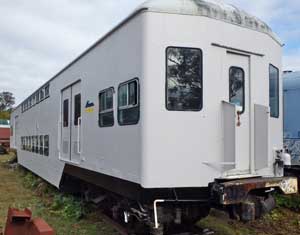
In the 1960s, the tenders were called for the first double decker passenger rolling stock. Between 1964 and 1968, 120 double deck trailer carriages were delivered to the NSW Government Railways from Tulloch Limited. They were incorporated into sets with single deck power cars. Tulloch delivered a number of double decker motor cars in 1968. When coupled with the double decker trailer carriages they formed the worlds first fully double decker Electric Multiple Unit trains.
One of the original carriages from Tulloch
In 1970, the first intercity Double Deck V-set trains entered service. At the time, these trains were described as the “most luxurious commuter stock in the world”. Delivered over 19 years, most of the newer sets are still in service.
Intercity set V3 at Katoomba
In 1972, the first Comeng-constructed stainless steel double deck suburban power-cars entered service. These cars were originally paired with Tulloch trailer cars , but from 1973, Comeng Trailer cars entered service. Later in the 1970s, A Goninan & Co constructed a number of similar cars. Whilst most of these 1970s sets have since been retired, 24 of them still operate as S sets on the T2, T3, T6 and T8 lines.
Goninan built the first air conditioned suburban trains in 1981, with 160 K sets being delivered through 1985. In 1986, similar C sets with more modern safety features were introduced.
Three Tangaras in the the foreground, with a K set in the background at Penrith
Between 1988 and 1996, 530 “Tangara” cars were introduced. These trains marked the first major redesign for the suburban rolling stock since double decker trains were introduced were and were also the last publicly funded new train design in NSW. These new trains allowed for the fill retirement of single deck suburban services in 1993.
Millenium Trains were introduced in 2002 and have formed the basis of all new trains delivered since. These were the first passenger trains in NSW to include automated announcements and information displays. These M sets allowed for the retirement of the original Tulloch carriages.
55 four carriage OSCar sets were delivered between 2006 and 2012 that allowed the oldest V sets to be retired and some services to be increased form four to eight cars in length. The H sets allowed for the next generation features found on M sets to be available on longer Intercity services.
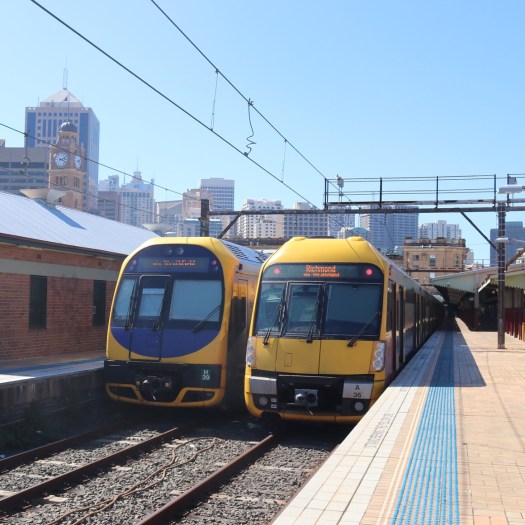
OSCar set H39 and Waratah set A36 at Central Station
Waratah trains are the latest design of double decker trains to be deliver to the NSW government railways and the first model to be built outside of Australia. These Chinese built trains continue on the design of the Millennium with some m minor improvements. The original order included 78 8-Car A sets. From 2018, 24 8-Car B set trains will be introduced to replace the remaining 24 S-Set trains.
Following a successful trail of E-Paper real time timetables at two bus stops in the CBD earlier this year, the government has decided to proceed with the rollout of the technology.
First, they will be installed at the two bus stops at Sydney Airport, located outside the T1 International and T3 Qantas Domestic terminals. Servicing Sydney’s busiest bus route, the 400 from Bondi to Burwood via Eastgardens and Rockdale, the location was chosen as many customers boarding at these locations might not have access to apps with real time data as in many cases they have only just arrived in Sydney for the first time.
Believed to be an Australian first, the compact digital screens are a sustainable, solar powered and innovative solution to a previously paper based communication channel. Information used in the new signage comes from real-time bus data, populated by on-board GPS on each bus, giving customers helpful arrival and capacity information. The displays can also provide incident alert messaging for disruptions like road closures associated with special events like Mardi Gras and Anzac Day, or unplanned disruption like a traffic incident affecting the broader network.
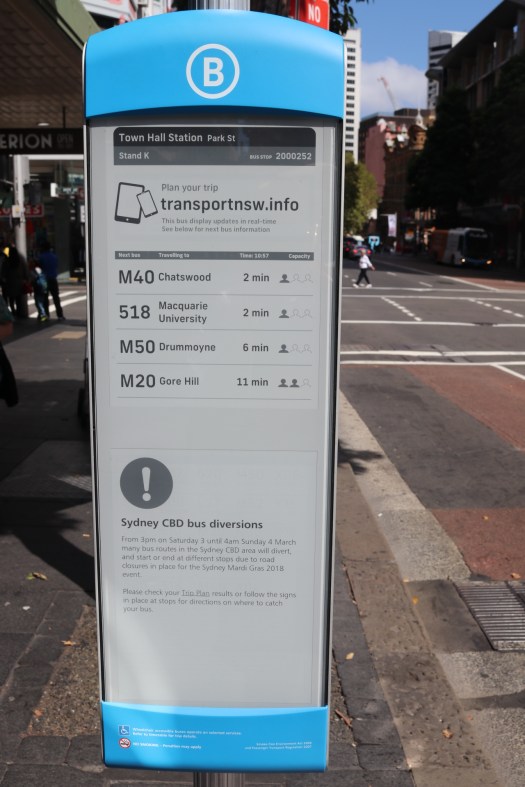
The signs show information such as Route Destination, Real Time Arrival and Loading data. Image is of test prototype from CBD.
The technology will be installed at two airport stops ahead of the September school holidays.
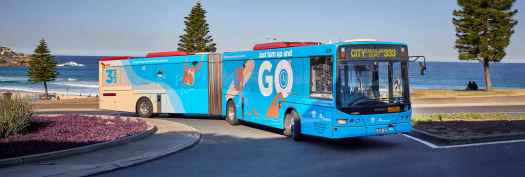
From September 23 2018, there will be major service changes to bus services in the Eastern Suburbs. Route 333 will become a high frequency high capacity turn up and go service, running 24 hours. Additionally, Routes 382, X79 and X84 from North Bondi and the 361 from Tamarama will be discontinued and routes L24, 380 and 381 will have major service alterations. Elsewhere, many routes will have timetable changes.
Full Details of changes below;
Route
Location
Change type
323
Dover Heights to Edgecliff
Route change
Route will be extended to operate between North Bondi and Edgecliff via Dover Heights (old route operated between Dover Heights and Edgecliff only)
In the Dover Heights area, route 323 will no longer stop at the last two stops on Military Road and the stop on Peel Rd, instead operating via Portland St, Lancaster Rd and Military Rd to and from North Bondi
No change to the number of trips or the operating hours
Route 323 has been timed to facilitate connections to F4 ferry services at Rose Bay Wharf
324, 325
Watsons Bay to City via New South Head Rd
Timetable changes
Additional evening services, increasing service frequency to every 40 minutes on both routes from the current 60 minutes
L24
Watsons Bay to City via New South Head Rd
Route change
Route changed to operate between Vaucluse (Old South Head Rd) and Wynyard
Passengers from Watsons Bay will instead need to catch the more frequent route 324
The service will now serve all stops between Vaucluse and Edgecliff, then as per existing stopping arrangement to Wynyard
326, 327
Bondi Junction to Edgecliff
Timetable changes
Very minor changes to times for some trips but the frequency of services and span of hours they operate are unchanged
333
North Bondi to City via Bondi Junction
Route change
Peak period trips extending between North Bondi and Dover Heights have been withdrawn; customers can change to routes 323 and 380 services
The stopping pattern will be changed to reflect customer demand and changes to surrounding services
Additional services will operate throughout the week using high capacity bendy buses to address high customer demand along the corridor
333N
North Bondi to City via Bondi Junction
New route
New route 333N replaces the current 380 overnight all stops service between North Bondi and City
The service will run from 11pm until 6am operating at all stops
360
Clovelly to Bondi Junction
Timetable changes
Additional off-peak and weekend services, increasing service frequency to every 20 minutes
361
Tamarama to Bondi Junction
Route withdrawn
Replaced by route 381 (which will now operate via the Tamarama area) and the existing 360 service
370
Coogee to Leichhardt via Green Square
Timetable changes
Additional services will operate throughout the week, increasing service frequency to every 15 minutes during the day, 10 minutes during the peak
This service now provides more travel options for customers across the week
Route
Location
Change type
379
North Bondi to Bronte via Bondi Junction
Timetable changes
Additional AM and PM peak and evening services on weekdays with some bendy buses providing extra capacity during the busy AM peak period
More frequent daytime and evening services on weekends
X79, X84
North Bondi to Bondi Junction
Routes withdrawn
X79 customers to catch 379 from the same stops
X84 customers to catch 333, 379, 380 or route 386/387 from nearby stops
380
Watsons Bay to City via Bondi Junction
Route change
Route will be changed to operate between Watsons Bay and Bondi Junction only (currently operates to/from Circular Quay)
Customers to catch routes 333 and M40 between Bondi Junction and the City
Service extensions to and from Watsons Bay will commence and finish later across the week, operating into the evening
Services that do not extend to Watsons Bay will now commence and finish their trips at South Head Cemetery instead of Dover Heights, allowing connections with route 324
381
Bondi Beach to Bondi Junction
Route change
Route will be changed to operate between Bondi Junction and Bronte (north), via Bondi Rd and Tamarama, to replace the withdrawal of route 361
In the Bondi area services will no longer operate to Bondi Beach, instead operating via Denham St, Fletcher St, Gaerloch Ave/Dellview St to Bronte
382
North Bondi to Bondi Junction
Route withdrawn
Replaced by additional services on routes 333 and 380
386, 387
Vaucluse to Bondi Junction
Timetable changes
Additional early AM and evening services throughout the week
Additional Sunday services, increasing service frequency to every 30 minutes on both routes every day, during the day and night
M40
Bondi Junction to Chatswood
Timetable changes
Additional weekend services, increasing service frequency to every 15 minutes during the day
Additional early morning and late evening services throughout the week operating between Wynyard and Bondi Junction, operating from 6am to 11pm
891,893,898
UNSW to Central
Timetable changes
Services better aligned to passenger demand to start earlier and finish later
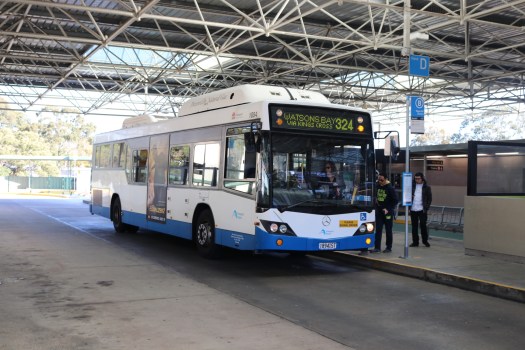
This month our featured bus route is State Transit Route 324. Route 324 operates between Watsons Bay and City Walsh Bay via Rose Bay, Edgecliff, Kings Cross and City Town Hall.
The original route 324 ran between City, Macquarie Street to Watsons Bay, running express between the City and Rose Bay began on 23 January 1950 after the closure the tram line between Rose Bay and Watsons Bay closed late in December 1949. Just five months later due to large protests, Route 324 was axed and the tram returned to service.
The service was reintroduced after the second closure of the tram line to Watsons Bay on 10 July 1960. It ran between Watsons Bay and Erskine Street Wharf. From 1966 the route began terminating at Circular Quay instead of Erskine Street. From 1979, the route was diverted to use the new Edgecliff Interchange and short runnings between Watsons Bay and Double Bay were extended to Edgecliff and renumbered 323. From 4 October 2015, the 324 was modified to operate to Walsh Bay instead of to Circular Quay as part of changes to the CBD bus network related to light rail construction.,
The route currently operates every 30 minutes through most of the day. During peak hour, services run the full length of the route every 20 minutes, alternating with a short running between Watsons Bay and Edgecliff Station also running every 20 minutes. This provides an overall frequency of 10 minutes between Watsons Bay and Edgecliff and encourages interchange to rail services.
Route 324 is serviced by State Transit’s Waverley depot. It is operated using 12.5m CB60 and Citaro bodied Mercedes Benz CNG buses.
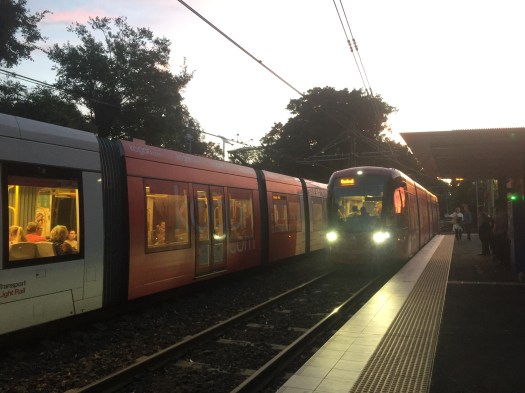
Due to the continued chronic overcrowding of Inner West Light Rail services, more frequent services will be introduced from August 6 2018.
Inner West Light Rail – Josh Quail
Between 10am to 2pm, extra services will improve frequency from 13 to 12 minutes, in line with the schedule already in place on the popular Wednesday services. The change will mean a 12 minute frequency on all weekdays between 10am and 3pm.
The afternoon peak will be extended to offer services every 8 minutes from 3pm to 7pm.
This time in Sydney’s Transport History we are taking a deeper look into the electrification of Sydney’s Railways.
Sydney’s Railways use an overhead electrification system at 1,500 volts direct current. The system is considered to be inferior than modern single phase alternating current equipment. This has caused problems with newer trains such as the M and A sets.
As part of Bradfield’s Railway Scheme built in the 1920s and 1930s, there were plans to electrify Sydney’s Suburban railways. These plans were designed to allow for safe running of the propsed City Circle loop that could not have steam trains using it.
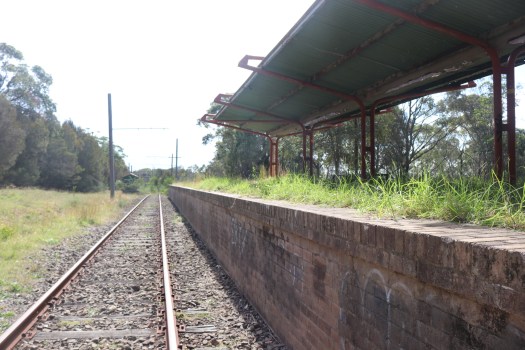
The Remains of Royal National Park Station, the far southern extent of the original electrocution in 1926
The first railway in Sydney to be electrified was the Illawarra Line between Central and Loftus in the Royal National Park. The first service operated from Central to Oatley on 9 December 1926. Less than two weeks later, the first new build electric line, a new city underground from Central to St James opened on 20 December 1926, with services from the electrified Illawarra line using it.
Soon after, a number of other lines were electrified including the Bankstown Line in 1926, North Shore Line in 1927, Western Line to Parramatta and Northern Line to Hornsby in 1929 as well as the Carlingford Line to Rosehill in 1936.
Some other new build electric railways were also complete around this time with the East Hills line completed in 1931 and the Sydney Harbour Bridge lines and underground lines connecting it to Central in 1932 and later the Cronulla line branching off the Illawarra line in the late 1930s.
After Bradfield retired, it wasn’t until the 1950s that further railways got electrified. A new station at Circular Quay complete the City Circle line which for the first time operated an underground electric loop through the Sydney CBD. Electric trains reached outside of Sydney to Lithgow via Penrith by 1957 and as far north as Gosford by 1960.
Additional suburban electrification reached Campbelltown in 1968, Riverstone in 1975, Waterfall in 1980, Macarthur in 1985 and Richmond in 1991.
On the Intercity Network, electrification reached Wyong in 1982 and later Newcastle in 1984. Trains to Port Kembla were electrified in 1985, whilst trains further south to Dapto weren’t electrified until 1996 and Kiama later still in 2002.
New build electric railways have slowly built across Sydney, with the Eastern Suburbs line to Bondi Junction opening in 1979, the East Hills to Glenfield link opening in 1987, the Olympic Park line in 1998, Airport Link in 2000, Epping Chatswood Rail Line in 2009 and the South West Rail Link in 2015.
Today all of the Suburban Sydney Trains network and a majority of the Intercity NSWTrains is electrified, with all new railways being built to electric standards. Despite this, there is still a long way to go, with thousands of kilometres of Intercity and Regional railways still reliant on diesel trains. There have been various proposals recently to extend electrification further south to Moss Vale and Nowra, west to Bathurst and North to Maitland. Whether these proposals go ahead is yet to be seen.
As part of the Sydney Metro City and Southwest project, major construction work will be carried out at Central station. This work will begin in August 2018 and is expected to be completed in late 2022 ahed of the planned 2024 opening for the new line.
Transport for NSW has contracted Laing O’Rourke to deliver the new Sydney Metro platforms under Central Station and the landmark Central Walk – a new underground pedestrian concourse helping customers get around Sydney’s busiest station. The contract involves;
Excavation and construction of the new underground Sydney Metro platforms at Central beneath platforms 13, 14 and 15
Central Walk – a 19-metre wide underground concourse from a new entrance on Chalmers Street, connecting customers to suburban rail platforms, Sydney Metro platforms, the new light rail and buses
An upgraded north concourse with transformed pedestrian thoroughfares and feature roof.
Diagram of the works being carried out at Central Station – Transport for NSW
The key features and benefits of this work include;
New underground Sydney Metro platforms, with platform screen doors to keep people and objects away from the tracks and allow trains to arrive and depart from the station faster
Easy interchange with suburban and intercity trains, buses and light rail
New underground pedestrian connections
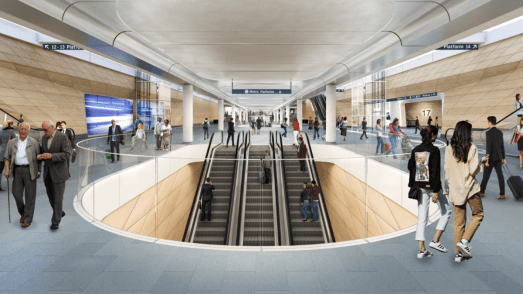
Customers can use escalators to get to platforms 12 to 23 for the first time
New signs throughout the station to make it easier to get around.
Artist Impression of the new Sydney Metro Platform – Transport for NSWArtist Impression of the new Central Walk concourse – Transport for NSW
Central Station Metro work will result in temporary changes to customer access around the station at different times. The project team will work closely with Sydney Trains and NSW TrainLink to minimise disruption, and provide advanced notice and information about how to get around to customers throughout construction.
To safely complete construction activities in and near the rail corridor, work will be undertaken on the track during scheduled Sydney Trains rail closures. This ensures worker and customer safety, and allows for work on the track and platforms without disrupting trains.
Keolis Downer, the embattled company that has been operating Newcastle Transport since mid last year has finally caved into large numbers of complaints regarding its new bus network introduced in January. Some major changes will be made to the network and all timetables will be refined from July 29.
The major changes include;
Extending the route 14 to connect Swansea Heads to Belmont, Charlestown, Kotara and the CBD.
Extending the route 41 to connect Valentine and Eleebana to Charlestown.
Extending the route 43 to connect Floraville and Windale to Charlestown.
The route 44 will now travel from Warners Bay to Glendale, Cardiff, Macquarie Hills and Kotara.
Routes 23, 26 and 28 will now service Marketown.
These changes will better reflect actual traffic conditions and travel patterns.
This month our featured bus route is route 492 from Drummoyne to Rockdale via Five Dock, Burwood Campsie and Kingsgrove. This route is operated by Transit Systems Australia as part of its Region 6 contract.
A Scania K280UB with Bustech VST bodywork operating a 492 to Rockdale in Drummoyne on the last day of State Transit operation 30/6/18A Scania K280UB with Custom Coaches CB80 bodywork operating a 492 to Drummoyne in Burwood on the first day of Transit Systems operation – 1/7/18
The corridor between Drummoyne and Rockdale has been serviced by direct bus service along a route similar to the current corridor since March 1937, when DGT route 92 from Campsie to Drummoyne was merged with United Motors route 44 from Campsie to Rockdale. The route retained the 92 designation, running through from Lyons Road, Drummoyne to Rockdale Station. It was later renumbered 992 in September 1940 and again to 492 in March 1944. Since then the route hasn’t seen much change other than small route changes, including an extension to Birkenhead point in the late 70s. On July 1st 2018, the route was handed over to Transit Systems Australia from State Transit as part of the Region 6 privatisation. Prior to this, the route had been government operated for its entire 81 year history.
Today Route 492 is operated out of Transit Systems Kingsgrove depot, using a variety of buses with Scania chassis and a mixture of different bodyworks. The service runs every 30 minutes between 5am and 11pm daily, with extra services between Kingsgrove and Rockdale providing a service every 15 minutes on weekday peak hours. The service takes around an hour to operate end to end.




 Additionally, Routes 382, X79 and X84 from North Bondi and the 361 from Tamarama will be discontinued and routes L24, 380 and 381 will have major service alterations. Elsewhere, many routes will have timetable changes.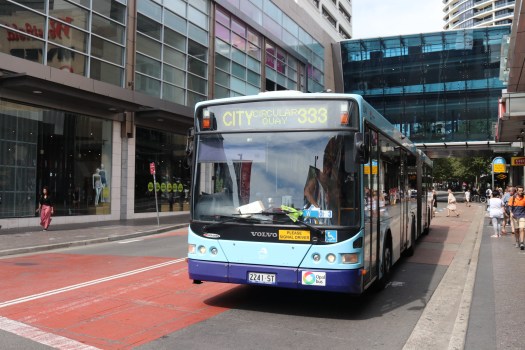




 Transport NSW Blog