Featured Bus Route – November 2018

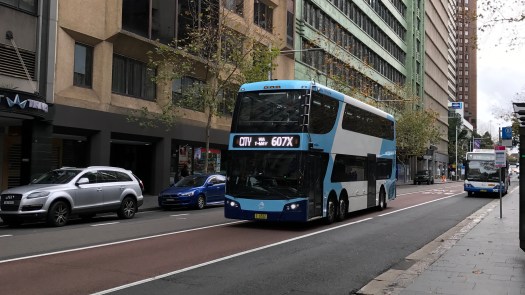
Route 607x between Rouse Hill and City QVB via T-Way and M2 is our featured bus route for November. Operated by Hillsbus, this is a route that has been immensely successful over its relatively short operational period. It has seen numerous frequency upgrades and the use of double deckers to meet demand.
IMG_0612.jpg
A Bustech CDi operates a 607x past Wynyard – Transport NSW Blog Collection

The 607x began operation as a supplementary, pre-Christmas route between Railway Square and Rouse Hill Town Centre via T-Way in that direction only on Thursday, Friday and Saturday evenings from 7 December 2011. Due to its success, it was upgraded to a off peak, late night and weekend two way service from 3 January 2012, with non the non T-Way 617x continuing in peak hours. Continued success saw a frequency upgrade as well as peak hour services introduced from 30 April 2012. Due to CBD and South East Light Rail works, the route was truncated on the city end to City QVB from 4 October 2015. Route 607x became a designated overnight service from 27 February 2016, with 24 service on Friday and Saturday nights. At this time a turn up and go peak hour service was introduced as well as high capacity double decker buses.

Today it operates every 5 minutes in peak hour, every 15-20 minutes off peak and every 30 minutes later at night. It sees service between 5am and 1am Sunday through Thursdays with 24 hour service on Fridays and Saturdays. It is operated by 14.5m and double decker buses from the CDC Hillsbus Foundary Road Depot.
 

Reader Proposals & Questions – Sydney Metro

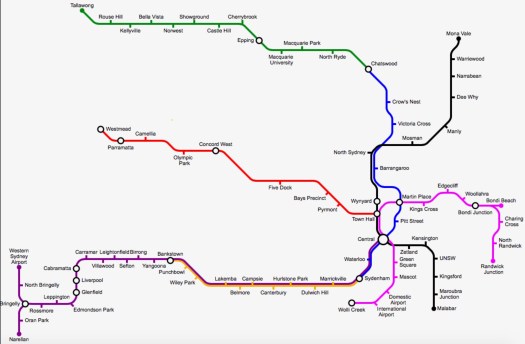
We often receive some great submissions from our readers – and those particular readers love seeing their work get shared on the blog. Today we have two maps showing potential future rail plans for Sydney. Scroll down further to see a few of the Sydney Metro related questions we have also received recently.

Screen Shot 2018-09-15 at 2.19.11 pm.jpeg
Future Sydney Metro Network Concept Plan – Zac Scott

Continue reading “Reader Proposals & Questions – Sydney Metro”

Photos – October 2018

Here are our favourite transport photos from October

IMG_6088.JPG
The start of the new rail tunnel between Bella Vista and Epping at Bella Vista – Transport NSW Blog Collection
IMG_6053.JPG
New Bella Vista Metro Station – Transport NSW Blog Collection
IMG_5962.jpg
The first day of 362 operation for the 2018/19 summer – Transport NSW Blog Collection
IMG_5686.JPG
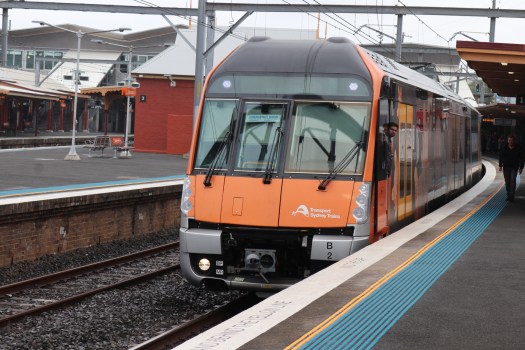
B2, the first Waratah B set to enter service – Transport NSW Blog Collection
IMG_5844.JPG
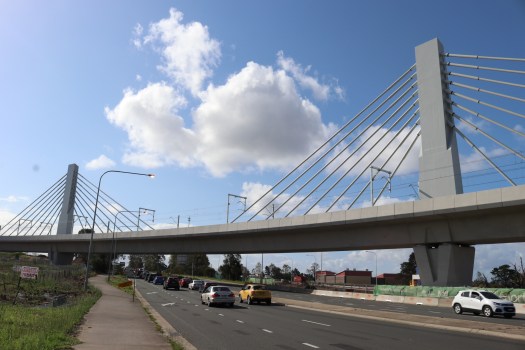
The new Sydney Metro Skytrain cable stayed bridge at Rouse Hill – Transport NSW Blog Collection
IMG_5617.JPG
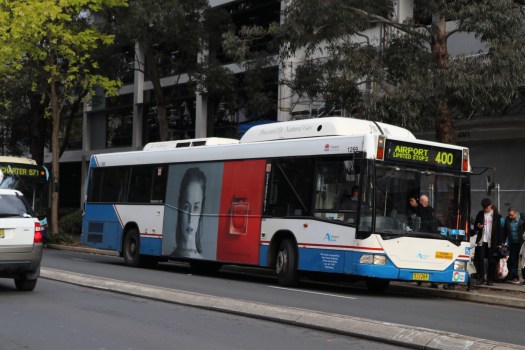
The new truncated 400 to Sydney Airport – Transport NSW Blog Collection
IMG_5553.JPG
StationLink SL1 to Chatswood leaves Epping – Transport NSW Blog Collection
IMG_5505.JPG
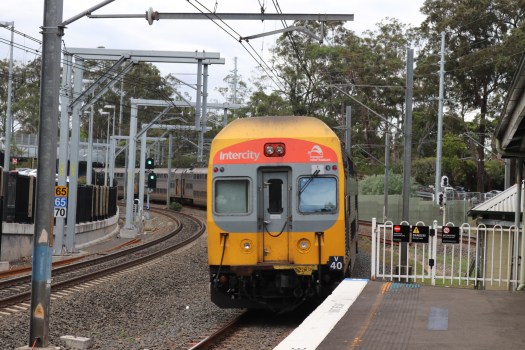
V40 trails V7 out of Beecroft on a Newcastle Service – Transport NSW Blog Collection

A Period of Progress

The past few weeks have been a time of great progress right across Transport in NSW. Major projects that have seen great progression of late include Newcastle and Sydney Light Rail projects as well as the Sydney Metro City and Northwest projects.

Newcastle Light Rail

Screen Shot 2018-10-24 at 11.16.22 am.png
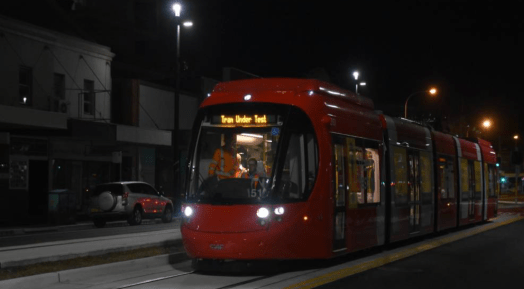
Tram Under Test on Hunter Street – Newcastle Herald

The light rail line up in Newcastle is now in full testing mode. It is the first wire-free light rail line in Australia and has now began testing using its batteries, which are recharged at each station. Currently most testing is being done at night however daytime testing is scheduled.

Sydney Light Rail

IMG_3673.JPG
The Randwick Racecourse turnback – Transport NSW Blog Collection

The signalling centre has now been turned on and live daytime tests using the signals in the Randwick Racecourse turnback have begun whilst regular at speed tests to Lang Road continue. Further, most stations have now begun construction and track laying is nearly complete.

Sydney Metro City

Screen Shot 2018-10-24 at 11.16.47 am.png
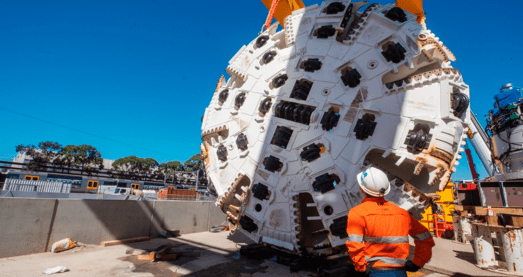
TBM Nancy at the Marrickville Tunnelling Site – Transport For NSW

Tunnelling for the Sydney Metro City project has begun. Tunnel Boring Machine Nancy is one of five TBMs that will build this project and it has recently been deployed from the Marrickville Tunnelling site, from where it will tunnel as far as Barangaroo. The other four TBMs will begin tunnelling in coming months.

Sydney Metro Northwest 

IMG_5838.JPG
The Skytrain portion of the Metro at Rouse Hill – – Transport NSW Blog Collection

Most civil construction for Sydney Metro Northwest is now complete, with stations now in the fit out stage. The Epping to Chatswood section of the line now under conversion to allow for the automated single decker trains to operate along it.

Other Updates

IMG_5623.JPG
The newly truncated 400 at Mascot Station, with a bus at the new 357 layover behind – Transport NSW Blog Collection
IMG_5546.JPG
One of dozens of buses replacing trains as part of the new StationLink network – Transport NSW Blog Collection

The new train timetable introduced on September 30 seem to be less problematic than last Novembers (touch wood), with no major delays or complaints being fielded. The new bus networks in the Eastern Suburbs seem to be working relatively well and the StationLink appears to be coping with demand and traffic conditions up in Macquarie Park.

Look out for more photos of Transport in October next Wednesday as well as our Sydney’s Transport History feature into the Demise of the Sydney Tramways which will be released later this week.

Sydney’s Transport History – The Worlds Steepest Railway

Many people are surprised to hear the steepest railway in the work is right here in New South Wales. Located at Scenic World in Katoomba, the “Scenic Railway” isn’t your standard everyday train line.

The short and steep line forms one of many attractions at Scenic World in Katoomba, which also includes the worlds steepest cable car. Guests can access the line for a fee, with services every 10 minutes between 9am and 5pm.

The line was originally bulit as a freight line to haul coal and oil shale from mines on the floor of the Jamieson Valley up to the escarpment above back in 1878. From 1928, the miners began supplementing their income by operating services for passengers on weekends. This service continued until the closure of the mine in 1945.

Since then the line has operated as a tourist attraction, with multiple major refurbishments of the line being conducted. The original steam winch train used for passenger services back in 1928 was named Jessie carried 12 passengers. Jessie was replaced by the Mountain Devil, a 23 passenger electric winch trains in 1935. By 1952 these trains had been replaced by newer 28 passenger trains. Newer, larger trains were again introduced in 1974 and 1994. Most recently all the tracks and the rolling stock were replaced in early 2013. This saw the number of carriages increased to four, carrying 84 passengers.

IMG_3287.JPG
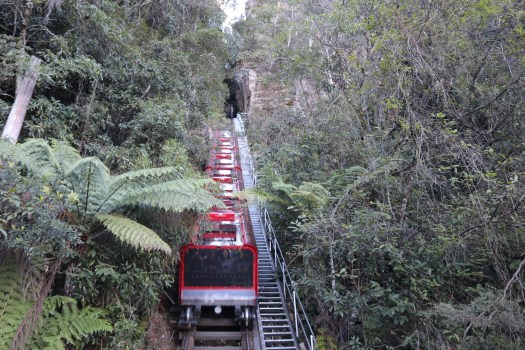
The railway in operation today

The line is what is known as an Incline Cable Railway, which means that the trains on the line are hauled by a cable. The line has an incline of 52° or 122% on its steepest section, which is the steepest incline on any railway in the world. In the 310 metres the line travels, it loses 205 metres in elevation whilst travelling at 4m/s.

Featured Bus Route – October 2018

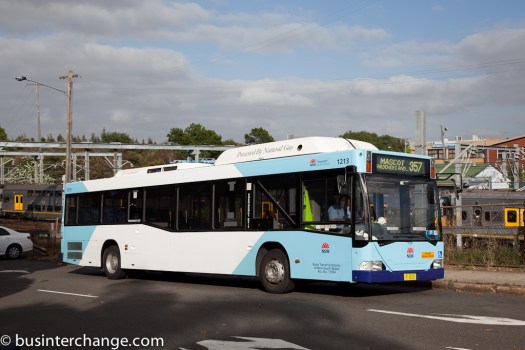
The featured bus route this month is Route 357 operated by State Transit. It operates between Bondi Junction and Mascot Station via Randwick, Kingsford and Eastlakes.

1213P_357ii.jpg
The 357 in service in 2011 at Sydenham Station, operating a short running to Mascot. Photo Credit – Norbert Genci (Bus Interchange )

The 357 has had an interesting history stretching back many decades and route numbers. Initially the corridor between Bondi Junction and Sydenham via Kingsford was serviced by route 358, with evidence of service from around March 1947. The service was later renumbered 367 and extended to operate between Bellevue Hill and Sydenham from July 1952. At unknown dates between 1962 and 1982 the service was truncated back to Bondi Junction, later at an unknown date between 1982 and 1997 the service was renumbered route 357.

The designation 357 had previously been used for a number of services including a Bondi Junction to Pagewood service in the 1940s and 50s and later local feeder services in Kingsgrove and Maroubra.

At least since the advent of Better Buses East in 2002, many of Route 357 services operated as short runnings between Bondi Junction and Eastlakes only, with service through to Sydenham limited to weekday peak hours. Up until April 2009, the service operated via Meeks street and Botany Street through Kingsford. With the abolition of route 359, it was rerouted to run via Avoca Street and Rainbow Street.  On 20 October 2013, the route once again had a change in route number, merging with route 418 to become a Bondi Junction to Burwood service via Sydenham under the route 418 designation. From March 2017 as part of the Light rail works, the 418 stopped serving Randwick Junction, instead operating through the back streets of Randwick.

Due to the privatisation of bus routes in the Inner West Region 6 area, many cross regional routes such as the 418 were cut in half. The 357 designation was returned for the Eastern half of the 418 between Bondi Junction and Mascot Station from 30th September 2018, with the 418 operating between Kingsford and Burwood.

Photos – September 2018

We always get requests to see more photos from across the Sydney transport network here on the blog. Every month we are out and about taking hundreds of photos but very few of them ever actually make it the whole way from our cameras to the blog. To showcase some of these photos, we are proposing that we share some of our favourite photos with you at the end of each month. This way, our photos don’t go to waste and you get to see parts of the network that would otherwise be unknown to you.

IMG_3535.jpg
A black and white Circular Quay, with Carnival Spirt at the OPT – M. Bustamante
IMG_3648.jpg
Two ferries seen from the train at Circular Quay – M. Bustamante
IMG_3692.JPG
Trams at Randwick Depot – Transport NSW Blog Collection
IMG_3902.JPG
Train operates through the Epping Chatswood Rail Link before its closure – Transport NSW Blog Collection
IMG_3966.JPG
Route 400 operating to Burwood ahead of its truncation to the Airport – Transport NSW Blog Collection

Upcoming Transport Changes

Major changes are coming to the NSW transport network from tomorrow (Sunday 23rd September), with additional changes starting from next week (Sunday 30th September).

As we have previously reported these are very major network changes including a new bus network for the Bondi and Mascot areas as well as a new train network for the North Shore and Northern suburbs. You can find out all of the details at the links below

  • Eastern Beaches Bus Service Changes from 23rd September here
  • All Changes from 30th September here
  • Train Changes from 30th September here
  • 400 and 418 Mascot changes from 30th September here
m1376-bondi-333-transport-carousel
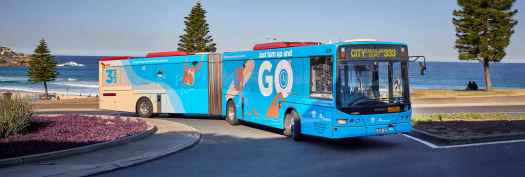
Route 333 between North Bondi and City Circular Quay is becoming a 24 Hour Rapid Transit Turn Up and Go service from 23rd September – Image: Transport For NSW
bus-on-suburban-street
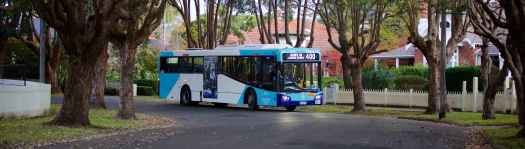
Route 400 between Bondi Junction and Burwood is being cut in half alongside other major route changes in the Mascot area from 30th September – Image: Transport For NSW
transportfornsw_0795_ext
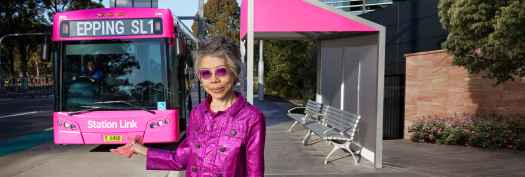
Station Link buses are replacing all train services between Chatswood and Epping from 30th September – Image: Transport For NSW

Sydney’s Transport History – The Development of the Tramways

Sydney was once home to one of the largest tramway network in the world. Back at the hight of the operation, over 400 million journeys were made each year over 291km of track. Today we take a look back at the development of the Sydney Tramways.

image.png
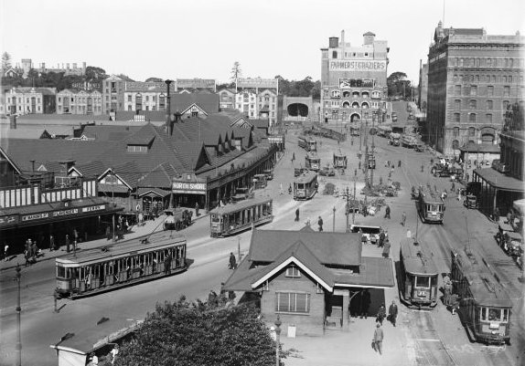
Circular Quay at the height of the tramways in 1923

The first tramway opened in Sydney in 1861. It was a horse drawn line between the Old Sydney Railway Station in Redfern and Circular Quay along Pitt Street. It was short lived and closed in 1866 after complaints about the damage the tracks caused to wagons and a fatal accident.

In 1879 the tramways returned, this time with a steam tram line between Redfern Station and Hunter Street in the Northern CBD. The success of this line quickly lead to many lines being developed throughout inner Sydney. Initially throughout the 1880s and 90s, the lines were built as steam lines.

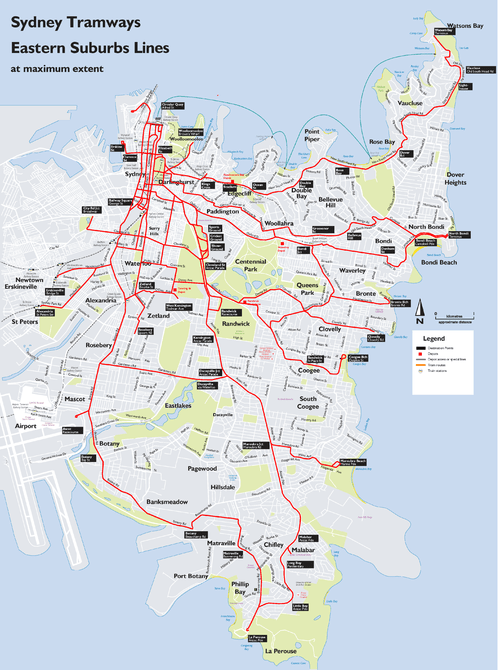
From 1898 the network began to be electrified, with most of the System converted by 1910. Lines from Circular Quay to the Eastern and Inner Western suburbs throughout the life of the network. Many well known lines included the one to Bondi, which reached the Beach in 1894. The lines to Coogee and La Perouse line, which opening in Stages from 1880, being the first Suburban tram line in Sydney and containing what may have been the first tram balloon loop in the world. The lines reached Coogee in 1883 and La Perouse in 1902.  The line to Ryde was the longest line in the network, at nearly 20km long.

From 1886 lines operated on the North Shore from Millions Point, until the Sydney Harbour Bridge opened in 1932, when most services were redirected to Wynyard and connected with the mains system south of the harbour. Lines from Manly began in 1903, and operated along the Northern Beaches seperate from the main system. Also isolated from the main system were the Southern suburbs lines, operating as rail feeder services for the Illawarra line.

The Tramway network reached its fullest extent in 1923, with over 291km of track. At the time nearly 1600 cars were in service at any one time. The network was the second largest in the Commonwealth of Nations, after London and the largest in Australia.

This article just scratches the surface in the development. For information on a specific line, let us know and we will give you information. image.pngimage.pngimage.pngimage.png

Sydney’s Transport History – The First Government Bus

The continuous 85 years that the State government has run bus services wasn’t actually the first time that Government had run bus services. Back in 1905, the Government Railway Commissioners began a motor omnibus service.

The Government Motor Omnibus Act, 1905, allowed the Railway Commissioner the power to construct, purchase or lease motor omnibuses and operate them on routes as approved by the governor. Orders were placed for four steam buses for Clarkson Ltd, of Chelmsford, England and were bodied by Angus & Son in Newtown. This practise of importing Chassis and locally building bodies continues with the government bus services today.

The first two buses, 18 passenger single deck 1M and 2M inaugurated government bus services in Sydney on 4 December 1905. They operated between Potts Point and Taylor Square on Oxford Street in Darlinghurst, a distance of just under 2 kilometres. One bus would operate the service whilst the other would act as a standby in case of a breakdown. High costs coupled with low revenue saw the service ceased by 7 April 1906.

IMG_2298
Bus 1M that operated the first government bus service in Sydney between Potts Point and Darlinghurst on 4 December 1905

On 23 April 1906,  double deckers 3M and 4M began their short lived life operating a 2.5 kilometre route between Dulwich Hill and Enmore. These busses were even more short lived than the original route, dealings service on 29 May 1906 due to the unsuitability of the chassis to the type of work.

IMG_2296
Bus 4M, one of two original double decker buses used between Dulwich Hill and Enmore in April and May 1906.

After racking up losses of more than £6600 over just six months of operation, the buses were scraped at Randwick Workshops. This left the Railway commissioner to focus on Tramway and Railway operation and the bus network to a myriad of private operator for the next 26 years.