Where Can You Fly? | COVID-19 Edition – International

With COVID-19, travel has come to a grinding halt. Australians are not permitted to travel overseas from Australia and there have been significant limits placed on domestic travel as well. As a result, most of the regular passenger flights that fly into Sydney have been cancelled.

Whilst some cancelled flights may not matter to those of us at home, for Australians stuck overseas, it has become a nightmare to get home. There are now just 10 commercial international flights that are still flying into Sydney. Most of these flights operate on a less than daily basis, but they generally operate at least twice a week.

map-1.gif
Map of remaining international flights to Sydney as of 15 April 2020 – GC Mapper

Qatar Airways is maintaining their daily QR908/909 service from their Doha hub. Passengers from nearly 70 destinations can still connect at Doha onto QR908 to Sydney, although you can’t leave the terminal due to a ban on foreign arrivals. This is the best option for passengers throughout Europe, the Middle East and Africa due to the ease of connections and availability of flights with Qatar.

Malaysia Airlines is operating a twice weekly MH122/123 service from their Kuala Lumpur hub. You can still transit via KL, however Malaysia Airlines has cancelled most of their flights and as such limited options are available. You can connect to KLM flights to Amsterdam at KL on a combined Malaysia Airlines-KLM ticket.

Singapore Airlines is operating at least twice weekly on their SQ211/232 service from their Singapore hub. Australians cannot transit in Singapore as all transit passengers have been banned from Singapore. These flights are only for Australians returning home from Singapore or Singaporeans returning to Singapore.

Garuda Indonesia is operating a once weekly GA712/713 service from their Jakata Hub. Australians cannot transit in Indonesia as all transit passengers have been banned from Indonesia. These flights are only for Australians returning home from Indonesia or Indonesians returning to Indonesia.

Cathay Pacific is maintaining a trice weekly CX100/101 service from their Hong Kong hub. Australians cannot transit in Hong Kong as all transit passengers have been banned from   Hong Kong. These flights are only for Australians returning home from Hong Kong or Hong Kongers returning to Hong Kong.

China Airlines is maintaining a twice weekly CI51/52 service from their Taipei hub. Australians cannot transit in Taipei as all transit passengers have been banned from   Taipei. These flights are only for Australians returning home from Taipei or Taiwanese returning to Taipei. 

All Nippon Airways is continuing to operate three to four times weekly on its NH879/880 service from their Tokyo Haneda hub. Passengers can still transit via Tokyo Haneda, however ANA has significantly reduced their network. Options exist for connections from the US and Europe.

United Airlines is still operating their daily UA863/870 service from their San Francisco hub. You can still connect from domestic US flights onto the service to Sydney, with United offering transit from all major American cities. Passengers can transit from overseas where that country has not been restricted from transit by US officials.

LATAM is maintaining its four times weekly LA800/801 service from their Santiago hub via Auckland. Australians can still connect from throughout South America onto LATAM flights in Santiago. LATAM has special dispensation to allow for passengers to transit through New Zealand on this flight, as otherwise New Zealand have banned transit passengers.

Air New Zealand is still operating their three times weekly NZ103/104 service from their Auckland hub. Australians cannot transit in New Zealand as all transit passengers have been banned from New Zealand. These flights are only for Australians returning home from New Zealand or New Zealanders returning to New Zealand. 

Australians can obviously return home easily by commercial means if they happen to be in one of the 10 destinations with service to Sydney. For those who aren’t in one of these 10 cities, Qatar Airways via Doha, ANA via Tokyo Haneda, United via San Francisco and LATAM via Santiago are the best options. This is because they are the only four places where you can still connect onto a flight to Sydney as a transit passenger.
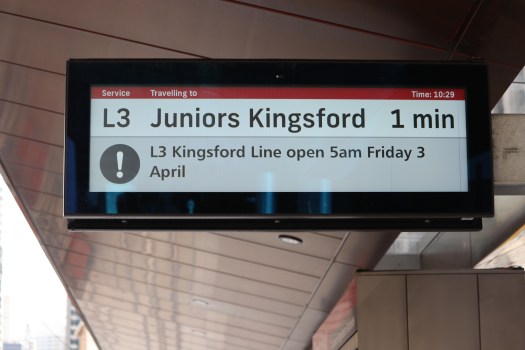
Photos – L3 Kingsford Line is Open

The L3 Kingsford Branch of the CBD and South East Light Rail opened on Friday 3 April at 5am. Check out our favourite photos from the day.

IMG_2060.JPG
Next service boards advertising the new line – Transport NSW Blog Collection
IMG_2033.JPG
Tram departing Town Hall for Kingsford – Transport NSW Blog Collection
IMG_2067.JPG
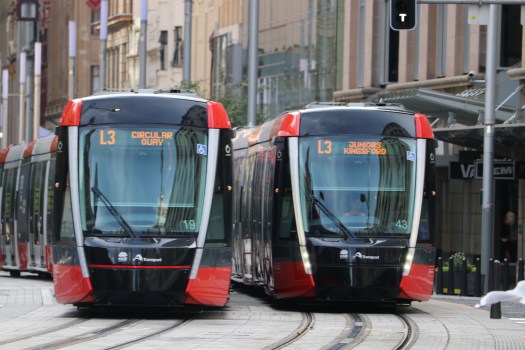
Two trams on the new L3 line pass on George Street in the CBD – Transport NSW Blog Collection
IMG_2083.JPG
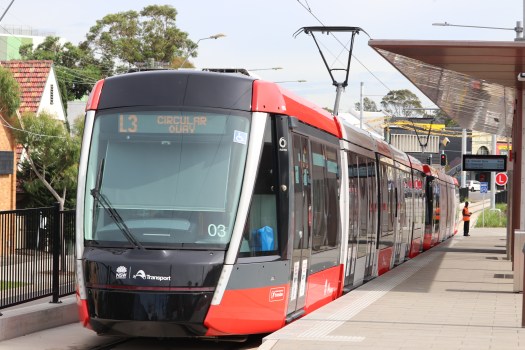
Tram setting down at the Juniors Kingsford terminus – Transport NSW Blog Collection
IMG_2091.JPG
Tram ready to depart Juniors Kingsford for Circular Quay – Transport NSW Blog Collection
IMG_2098.JPG
Signage for the Bus-Light Rail interchange at Juniors Kingsford as a tram departs – Transport NSW Blog Collection
IMG_2099.JPG
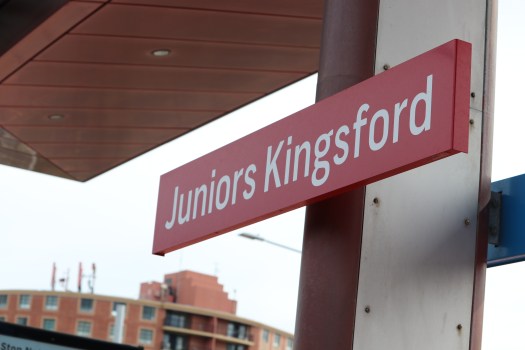
Signage for the Juniors Kingsford Station – Transport NSW Blog Collection
IMG_2101.JPG
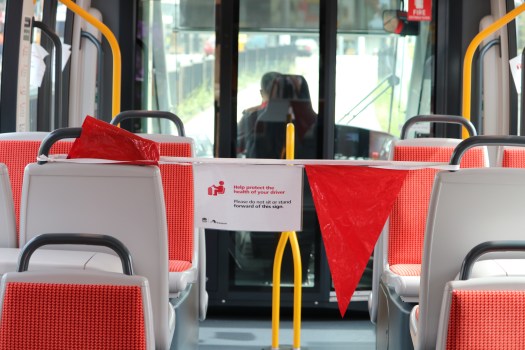
Social distancing measures implemented on trams on the new L3 line – Transport NSW Blog Collection
IMG_2121.JPG
An L2 Randwick and new L3 Kingsford trams sit side by side at the Circular Quay terminus – Transport NSW Blog Collection
IMG_2133.JPG
L3 Kingsford tram sits at Circular Quay terminus – Transport NSW Blog Collection

Transport NSW Blog would like to note that these photos were taken on an essential journey that would have occurred regardless of the opening of the light rail. Correct social distancing procedures were followed at all times. 

L3 Kingsford Line to open 3 April 2020

Finally, despite delay after delay, the L3 Kingsford Line is slated to open tomorrow Friday 3 April 2020. This comes after the government failed to meet its most recent opening target or “March 2020”.  The first service is expected to be at 10am.

IMG_7495
The L3 Kingsford Line will open at 10am on 3 April 2020 – Transport NSW Blog Collection

The line, as part of the CBD and South East Light Rail project, will operate between Circular Quay and Juniors Kingsford. It shares the same corridor through the CBD to Moore Park as the L2 Randwick line, before branching off and operating through Kensington and Kingsford in the median of Anzac Parade.

The line has been greatly delayed. The line was originally supposed to be finished in early 2018 for a mid-late 2018 opening. Due to construction delays and a legal battle between construction company Acciona and the government, this was revised to “some time in 2019”. Upon the start of testing in August 2019, it was revealed that the opening of the Kingsford branch had been further pushed back to March 2020. This was to allow for more time for testing and landscaping works. After missing the March 2020 date due to travel slowdowns imposed by the COVID-19 pandemic, a soft opening will instead take place on 3 April 2020.

The opening will be a ‘soft opening’. This means no press release or promotion of the new services in order to try and reduce the patronage on the line, which must open for contractual reasons. This ‘soft opening’ is due to the COVID-19 pandemic, in which people are being encouraged to stay at home and not travel unnecessarily.

Changes to Bus Services in Wagga Wagga

Busabout Wagga will operate more than 240 extra bus services in Wagga Wagga from Monday 30 March 2020 in the biggest ever increase to public transport for the major regional centre. This will include new evening services as late as 9pm for most routes on Thursday, Friday and Saturday evenings, Sunday service for the first time between 9am and 5pm as well as more route options and more frequent services.

This increase is part of the NSW Government Regional Growth Program, which is funding increases to bus services in 16 major centres across Regional NSW. Tweed was the first to receive the increase in December 2019, and is now followed by Wagga Wagga.

500px-Busabout_-_Bustech_VST_bodied_Mercedes-Benz_O500LE_6086MO.jpg
Busabout Wagga will operate more than 240 extra bus services from 30 March 2020 – Creative Commons via Wikimedia Commons
CHANGES TO BUSABOUT WAGGA SERVICES
Route 960

Charles Sturt University via Kooringal, Central Wagga and Estella

  • 64 extra weekly services
  • Increased services to operate every hour between Lake Albert and CSU
  • Straightened route now extends to CSU and Estella
  • New Thursday, Friday and Saturday services run until 9pm
  • New Sunday services run from 8am to 6.30pm
  • Route no longer runs via Tatton, TAFE, Railway Street or Red Hill Road between Tamar Drive and Plumpton Road. New Route 969 and improvements to other services provide connections to these areas.
Route 961

Central Wagga to Bourkelands via Mount Austin and Lloyd

  • 41 extra weekly services
  • Adjusted route extends to Lloyd
  • Northbound services into the CBD run via Best Street, connecting at Wagga Courthouse with buses to CSU
  • Thursday, Friday and Saturday services now run until 8.30pm
  • New Sunday services run from 9am to 4.30pm
  • Route no longer runs to Springvale Drive
Route 962

Central Wagga to Glenfield via Ashmont and Turvey Park (counter-clockwise loop)

  • 37 extra weekly services
  • Combined routes 962 and 963 provide services every 30 minutes between Southcity Shopping Centre and the CBD
  • Northbound services into the CBD run via Docker Street and Gurwood Street, connecting at Wagga Courthouse with buses to CSU
  • Thursday, Friday and Saturday services now run until 9pm
  • New Sunday services run from 8am to 5.30pm
Route 963

Central Wagga to Glenfield via Ashmont and Turvey Park (clockwise loop)

  • 47 extra weekly services
  • Together, routes 962 and 963 provide services every 30 minutes between South City Shopping Centre and the CBD
  • Northbound services into the CBD run via Docker Street and Gurwood Street, connecting at Wagga Courthouse with buses to CSU
  • Thursday, Friday and Saturday services now until 8.30pm
  • New Sunday services run from 9am to 4.30pm
Route 964

(discontinued)

  • Adjusted Route 966 replaces Route 964 with buses every two hours, seven days a week, for Estella Rise and areas previously services by Route 964
Route 965

Forest Hills to Wagga via East Wagga

  • 35 extra weekly services
  • New earlier services into the CBD on weekday mornings
  • Thursday, Friday and Saturday services now until 8pm
  • New Sunday services run from 9am to 4pm
Route 966

Central Wagga to Estella Rise via North Wagga and Estella

  • 21 extra weekly services
  • Thursday, Friday and Saturday services now until 9pm
  • New Sunday services run from 8am to 5pm
  • Adjusted Route 966 replaces routes 964 and 968, with buses every two hours, seven days a week, for Estella Rise and areas previously services by Route 964
Route 967

(discontinued)

  • Adjusted Routes 960 and 966 replaces Route 967
Route 968

(discontinued)

  • Adjusted Routes 960 and 966 replaces Route 968
Route 969

Tatton to Wagga via Mount Austin and Turvey Park (Riverina TAFE)

(New route)

  • 140 new direct weekly services between Tatton and the CBD
  • Services stop at TAFE and the Botanic Gardens
  • New Route 969 connects at Lakeside Drive interchange with Route 960 for services to CSU via Kooringal
  • Thursday, Friday and Saturday services run until 8pm
  • Sunday services run from 8am to 5.30pm
  • Morning and afternoon school buses are the only services on this route that run directly between Tatton and Kooringal Mall, and via Railway Street in town
On Demand Bomen service (Route 970)

Suburbs across Wagga to Bomen Business Park

(New trial service)

  • New public transport service to and from Bomen Business Park
  • Runs on weekday mornings and afternoons
  • Offers fixed-schedule services and bookable on-demand options
  • Pick-up and drop-off locations in suburbs across Wagga

COVID-19 and Transport

COVID-19 has thrown up a range of unique challenges for the transport industry. How do operators keep their passengers and operators safe whilst continuing to operate services? Transport for NSW and operators have been working closely with NSW Health to address the challenge of COVID-19 and support the containment efforts.

Across all modes, Transport for NSW has put in place strategies to help reduce the spread of COVID-19.


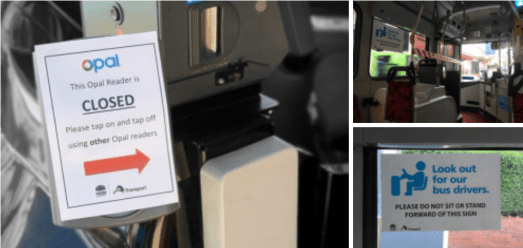
Transport for NSW and bus operators have taken steps to reduce driver passenger interactions on buses. This includes blocking off the front seats closest to the driver, closing Opal readers in front of the driver and banning people from standing in front of the wheelchair area. Operators that still accept cash payments have temporarily stopped them, if they also have Opal enabled.

Screen Shot 2020-03-20 at 10.09.52
Image 1 – Matt Tregear; Images 2-3 – Transport NSW Blog Collection

These measures still do leave the driver at risk, however it does reduce the level driver-passenger interactions and therefore the overall level of risk. Due to poor design of Australian buses, we can’t move to block the front door and force passengers on via the rear door like in Europe, as this would fall foul of Australian Disability Accessibility requirements.  Some operators in regional areas don’t have Opal, so they still have to handle cash.

COVID-19 hopefully will be the catalyst to make improvements to our bus services.  All entrances to buses should be fully accessible and all buses in NSW should accept contactless payment, not just buses in Sydney. These are practises that have been standard in Europe for more than a decade.

On light rail operations, doors are now auto opening at all stops. This is instead of passengers having to push a button to open vehicle doors. This stops people unnecessarily touching various surfaces. Across all modes, there is also now additional cleaning. This means that vehicles, stations, stops and wharfs are being cleaned more often and more thoroughly.

COVID-19 has also had the effect of significantly reducing passenger numbers. Usually full buses and trains have been operating empty or with no passengers. Peak hour express services have been particularly effected with people working from home.

2D3D94B6-E862-4A73-8750-E88153359BA9.jpg
Usually full buses and trains have been operating empty or with few passengers – Transport NSW Blog Collection

There is some suggestion that there may need to be a reduction in services. State Transit has begun reducing the number of services operated by articulated buses. A move to Saturday timetables during the week is also understood to be on the cards. It is simply unsustainable to continue to operate near empty buses for week or potential months.

Here in NSW, transport is largely funded by the state government. There isn’t a high level of reliance on fares to operate services. This is in contrast to places like Queensland or the United States, where transport is often funded at council or county level and are much more reliant on fare collection for continued operations. These areas will likely have a bigger impact on transport from COVID-19.

There is now some suggestion that long distance coach and train services should be suspended. This is because these services see passengers and drivers in enclosed spaces for longer periods of time. This puts these people at higher risk for contracting COVID-19. On the other hand, these services are often vital links for small regional communities. They would likely struggle if their lifelines were cut.

A reduction in aviation has also been seen across new as a result of COVID-19. Most international flights, including all Jetstar, Qantas and Virgin Australia international flights have now been suspended. Domestically, up to 60% of flights have also been suspended.

10794306080_IMG_8437.JPG
All international and a significant number of domestic flights in NSW have now been suspended – Transport NSW Blog Collection

This has led to people stranded overseas, however once again it is regional communities in NSW that are most at risk. REX and QantasLink services to regional NSW are lifelines for many communities, providing freight and trade links. Both of these airlines are reducing flights due to COVID-19, impacting on these communities.

Pandemics like COVID-19 have a significant impact on all aspects of life. Transport, as a shared community experience where people are in close quarters is one area that is particularly impacted. Here at Transport NSW Blog, we intend to keep you up to date with the latest changes due to COVID-19. Stay safe everyone!


First Insight into South East Light Rail Bus Changes

South-East Bus commuters got a first look at their bus network today, after confidential plans containing the proposal was leaked overnight. These changes are being introduced due to the opening of the CBD and South East Light Rail, in order to reduce service duplication between the tram and the bus network. The proposed changes will begin at some point after the L3 Kingsford Line of the light rail network opens later this month.

Version 3
South-East bus commuters are in for a shake-up of their network from later this year – Transport NSW Blog Collection

It is important to note that this confidential document is a draft document of the changes ONLY and is subject to change. Transport NSW Blog has confirmed the validity of the document with internal sources, which they say is mostly final, but do warn that some changes may occur. Transport NSW Blog has been made aware that an official announcement is to be expected later this week and it is believed that the leak was deliberate leak.

A full list of known changes is listed below;

NEW ROUTES

  • 319 – Maroubra Beach to Bondi Junction via Oberon Street, Randwick Junction and Charing Cross
  • 375 – Coogee Beach to Railway Square via Randwick Junction, Moore Park and Taylor Square
  • 390 – Coogee Beach to La Perouse via Randwick Junction, Kingsford and Maroubra Junction
  • 398 – Clovelly Beach to La Perouse via Randwick Junction, Maroubra Junction and Malabar Heights

CHANGED ROUTES

  • 348 – Wolli Creek to Bondi Junction changed to operate via High Street in both directions
  • 370 – Coogee Beach to Leichhardt changed to operate via High Street in both directions
  • 373 – Coogee Beach to Circular Quay becomes overnight only 373N Coogee Beach to Circular Quay via Taylor Square (11pm – 6am ONLY)
  • 391 – La Perouse to Railway Square becomes La Perouse to Kingsford via Bunnerong Road
  • 392 – Little Bay to Circular Quay becomes Little Bay to Redfern via Bunnerong Road, Kingsford and Green Square
  • 394 – La Perouse to Circular Quay becomes overnight only 394N La Perouse to Circular Quay via Taylor Square (11pm – 6am ONLY)
  • 400 – Bondi Junction to Sydney Airport changed to operate via High Street in both directions
  • All express routes will move to a four digit route number, but will be retained
    • X39 becomes 339X
    • X40 becomes 341X
    • X73 becomes 373X – potential for minor stopping pattern changes
    • X74 becomes 374X
    • X77 becomes 377X – potential for minor stopping pattern changes
    • X92 becomes 392X
    • X93 becomes 393X – potential for minor stopping pattern changes
    • X94 becomes 394X
    • X96 becomes 396X
    • X97 becomes 397X
    • X99 becomes 399X

CANCELLED ROUTES

302, 314, 317, 376, 377, 393, 395, 397, 399, 891, 893, 898, L94, M10 and M50

UNKNOWN ROUTE MODIFICATIONS or NO CHANGE 

At this stage it is unknown if the following routes will have any changes, however that they were included within the scope of the new bus network plan.

303, 307, 313, 316, 338, 339, 343, 353, 357, 372, 374, 396 and 418

Inner West Bus Changes from 9 February 2020

From Sunday 9 February, there will be changes to some bus routes and adjustments to other services across the Inner West. There will also be minor timetable changes to North Shore and Northern Beaches bus services.

10767236576_IMG_7773.JPG

CHANGES TO INNER WEST SERVICES
M10
  • Route changed to operate via Haymarket light rail/bus interchange for journeys towards Leichhardt
  • All services towards Leichhardt will operate via Elizabeth Street, Eddy Avenue, Rawson Place and George Street, and will no longer stop at Pitt St opp Barlow St
  • Changes to weekday trip times to support more reliable journeys


M20
  • Route renumbered to 320
  • Route withdrawn between Botany Shops and Mascot Shops to reduce service duplication, reflect customer demand and support more reliable journeys. Alternative travel options between Botany Shops and Mascot Shops include routes 309, 309X and 310X.
  • Changes to weekday trip times to support more reliable journeys
M30
  • Route renumbered to 430
  • Changes to weekday trip times to support more reliable journeys
  • The last two weekday evening trips from Sydenham towards Mosman will be changed to operate to Spit Junction only
420
  • Changes to weekday trip times to support more reliable journeys
  • An additional trip will be introduced on early weekday mornings departing Rockdale towards Eastgardens
440
  • Route changed to operate via Haymarket light rail/bus interchange for journeys towards Leichhardt
  • All services towards Leichhardt will operate via Elizabeth Street, Eddy Avenue, Rawson Place and George Street, and will no longer stop at Pitt St opp Barlow St
  • Changes to weekday trip times to support more reliable journeys
470
  • Changes to weekday trip times to support more reliable journeys
  • An additional trip will be introduced on weekday evenings departing Martin Place towards Lilyfield
487
  • Route 487 will be changed to operate via Canarys Road, Violet Street and Mount Avenue instead of Canterbury Road and King Georges Road to and from Roselands (early morning weekday trips not currently operating via Roselands will continue to operate via Canterbury Road direct)
  • Changes to weekday trip times to support more reliable journeys

Other services that will receive minor changes include;

  • 155
  • E54
  • E88
  • E89
  • 305
  • 308
  • 348
  • 389
  • 406
  • 407
  • 412
  • 413
  • 415
  • 418
  • 420
  • 422
  • 423
  • 425
  • 426
  • 428
  • 431
  • 433
  • 436
  • 438
  • 439
  • 440
  • 441
  • 442
  • 445
  • 447
  • 461
  • 464
  • 470
  • 473
  • 490
  • 491
  • 492
  • 493
  • 504
  • 526
  • 530
  • L37
  • L38
  • L39

Photos – Final Day of the Carlingford Line

In the early hours of Sunday 5 January 2020, the Carlingford Line carried passengers for the last time, ahead of its decommissioning. The line is set to become part of the Parramatta Light Rail network in the future, but now now the line has carried its final passengers.

Transport NSW Blog was there on the day to document this historic occasion. Enjoy some photos from the final day of the Carlingford Line.

IMG_8674
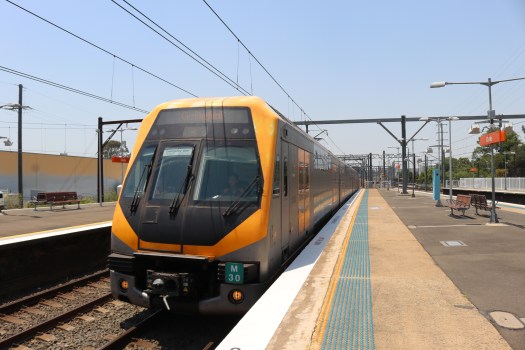
Four Car Millennium Set M30 operated the services on the final day – Transport NSW Blog Collection
IMG_8676
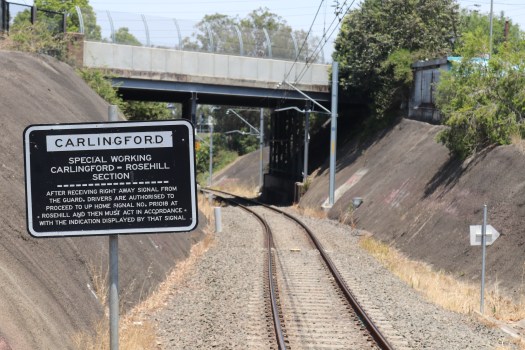
Signage at Carlingford indicating the special working section of the Carlingford Line – Transport NSW Blog Collection
IMG_8714
Heritage Set F1 operated shuttles between Clyde and Carlingford to mark the occasion – Transport NSW Blog Collection
IMG_8700.JPG
Heritage Set F1 departing Carlingford for the final time – Transport NSW Blog Collection
IMG_0622.jpg
M30 preparing for the final round trip between Clyde and Carlingford – Transport NSW Blog Collection
IMG_8753.JPG
PID showing the last return trip on the Carlingford Line, arriving into Carlingford at 1:46am on 5 January 2020 – Transport NSW Blog Collection
IMG_8769.JPG
The old fashioned wooden next train display at Carlingford, in use for the final time, showing the final train due out at 1:34am on 5 January 2020 – Transport NSW Blog Collection
IMG_8771.JPG
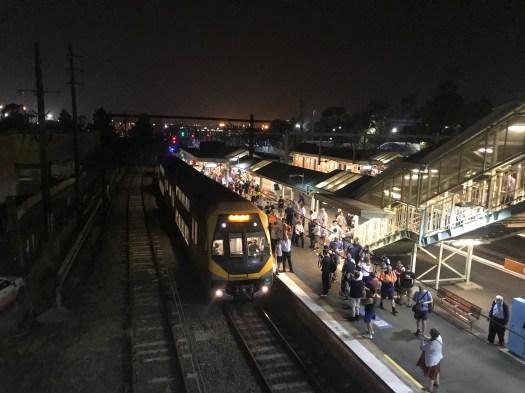
Train at Carlingford Station for the last time on 5 January 2020 – Transport NSW Blog Collection

Station Stories – Carlingford Line

In the early hours of Sunday 5 January 2020, the final service on the T6 Carlingford Line will operate. For 132 years, the 7 stations along the line have serviced a small yet sizeable number of people living in the North West suburbs. One of the last survivors of the the privately owned branch lines, this line is filled with history from its many years of operation as a branch between Clyde on the Main Western line and the suburb of Carlingford. In this post, we will have a look at the stories of each of the stations along the line. 

IMG_8240.JPG
The Carlingford Line will close in the early hours of Sunday 5 January 2020 – Transport NSW Blog Collection

It is however first important to know the history of the line as a whole and why it was built. The original lines were actually originally built in two stages by two different private investors. The original line was built between Clyde Junction and Rosehill, before extending through the nearby industrial estate to Sandown. This line was built by John Bennet to service his new Rosehill Racecourse and opened in November 1888. The second section of the line was built by Mr M Simpson between Rosehill and Carlingford. This line was constructed to carry produce from farms in the Pennant Hills area as well as service new property subdivisions in the surrounding areas, opening in April 1896. 

By 1897, both ventures had failed. It wasn’t until 1 August 1901 that the line was brought up to standard and services were recommended by the government. Since then, the line has largely operated as a shuttle service between Clyde and Carlingford. Occasionally peak hour limited stops services to Central also operated, but this was not the case at the time of the lines closure.

Carlingford Station

image.png

Originally named Pennant Hills Station, the government took control of the station following the collapse of the private owner in 1897. The station was upgraded and reopened as Carlingford Station on 1 August 1901. The station was single platform and single track, and served as the terminus of the Carlingford Line for nearly 120 years. The station was located by the Carlingford Produce Store, which for 90 years used a goods siding beside the station.

Telopea Station

image.png

Telopea was opened on 13 June 1925 as an infill station between Carlingford and Dundas. The station was constructed to service the suburban area surrounding the station. The station was single platform and single track. The station was added after 25 years of petitioning from local residents, most notably Herbert Rumsey who owned a nearby housing estate.

Dundas Station

image.png

The heritage listed Dundas station opened in 1896 as Kissing Point Road Station on the private Bennett and Simpson railway. It was the last privately constructed and owned station in NSW. It was destroyed in a fire in 2006, however it was completely reconstructed in the original style and as such retains its heritage listing.

Rydalmere Station

image.png

Rydalmere Station, originally named Victoria Road, opened in 1986 as part of the private Bennett and Simpson railway. The single platform at Rydalmere was original on the western side of the line, but was moved to the eastern side in 1993. This was to replace a disused goods siding.

Camellia Station

image.png

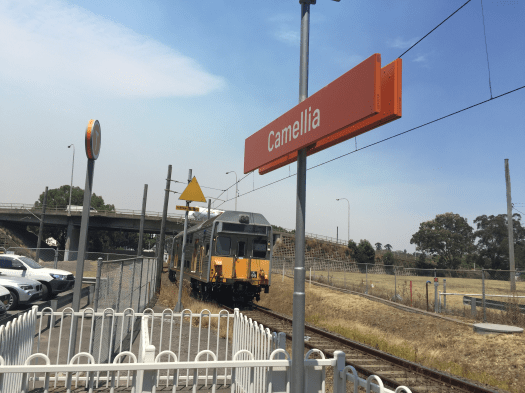
Camellia Station, originally named “Subiaco”, opened on 21 January 1885. Due to the name Subiaco being confusing for some locals, the station was renamed to Camellia upon the government takeover in 1901. Some timetables from 1899 and 1900 call the station “Parramatta Tram Junction”, but the name clearly didn’t stick. Camellia came from a nearby nursery at the time, Camellia Grove.

Rosehill Station

image.png

Rosehill Station opened at the site of the Rosehill racehorse in 1885. Access to the racecourse was the original intention of John Bennett constructing a railway along the corridor, as he believed that a railway would increase attendance at his raceways. He later worked out that he could also use the railway on non race days for industrial workers, who could change at Rosehill for a steam trail. The Warren Truss footbridge at the station is heritage listed.

Images and information sourced from Michelle Goodman & Janelle Blucher, Parramatta Heritage Centre. See there content here

Merry Christmas and Happy New Year

To all of our readers, Transport NSW Blog would like to wish you a very Merry Christmas and a Happy New Year. Thanks for an another great year hear at the blog and for your continued support. We look forward to continuing to post the latest transport news, photos and “featured bus routes” in 2020.

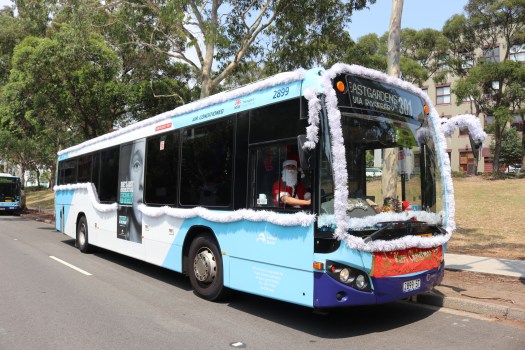
Santa aboard State Transit Port Botany Christmas Bus – Transport NSW Blog Collection

Many thanks to Adam Stevens of Transit Systems and Norbert Genci and Joshua Power of State Transit for helping us get photos of two of this years Christmas Buses.

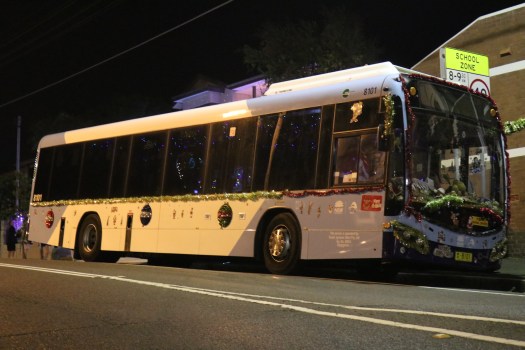
Transit Systems Kingsgrove Christmas Bus in North Bondi – Transport NSW Blog Collection
Transit Systems Kingsgrove Christmas Bus in Clovelly – Transport NSW Blog Collection
Santa Driving State Transit Port Botany Christmas bus in Redfern – Transport NSW Blog Collection
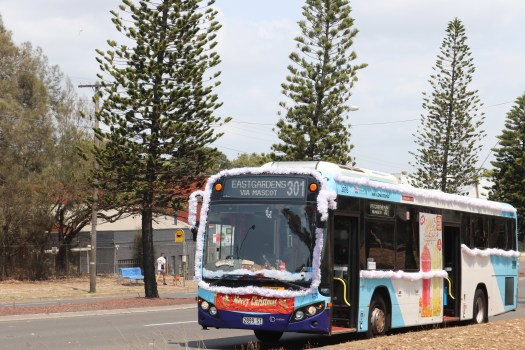
State Transit Port Botany Christmas bus in Pagewood – Transport NSW Blog Collection